Author: Joe Barnes
What 2 Ridiculous Tennis Matches Taught me about Mental Toughness and Life

AUGUST 1995
I’m a teenager and I’m competing in a local tournament. Although I’m not committed to becoming a pro, I take these competitions seriously. I see them as a test of my skill and mental toughness. They’re also sanctioned by the LTA (the main tennis organisation in the UK) and they carry ratings and rankings points. More than that, though, I’m playing against my main rival.
This kid is three years younger than me. We’ve played each other countless times in practise sets but this is the first time we’ve met in an official competition. If the results of our practises are anything to go by, it’s not looking good. Baring a recent draw (one set each), he’s beaten me every time. However, lately, I’ve been playing well.
The match starts just as I’d hoped. There are no nerves, I feel light on my feet and unable to miss. He’s trying everything he can, but the shots and patterns of play that worked against me in practise aren’t working now. As a result, I take a commanding lead. First set to Joe, a crushing 6 – 0.
The second set picks up where the first finished. He can’t do anything to break the run of play and the games are stacking up in my favour. As I reach five games in the second set, he still hasn’t registered on the scoreboard. Unbelievably, I’m 6 – 0, 5 – 0 up.
How have I done this?
This kid is three years younger than me. That really bothers me. It’s humiliating to be routinely beaten by someone who isn’t as physically developed.
The main issue, though, is that I’ve consistently underperformed in all my practise matches against him. When I’m playing, it’s like there’s something blocking me from giving my best. It feels like I’m a puppet on a string with a vindictive master ensuring that I miss the easiest of shots.
Now, though, it finally feels like I’m putting all of this to rest. I’m going to win. I’m actually going to win.
And that’s the problem. At 5 – 0 up, 30 all, it finally registers. I’m two points away from victory.
I’m about to destroy my main rival. Not only am I going to beat him, I’m going to humiliate him. He’s going to leave this court without winning a game and all those practise victories will mean nothing in comparison to the thrashing I’ve given him when it really counts.
As soon as I think these thoughts, everything changes. The puppet master suddenly appears. He’s messing with me again. My arms go to jelly. I can barely hold the racket. My mental toughness deserts me. 30 all turns to 40- 30, and then I lose the game.
At 5 -1 up, you’d think I’d be able to steady the ship, regroup, and focus on the positives. Somehow, though, I know I’ve blown my chance. In an instant, the momentum completely shifts and the familiar pattern of our matches returns. In another instant, the set is over. I’ve lost it 7-5.
It’s now one set all. At this point, I should be able to take a step back, clear my mind and focus on putting everything I’ve got into the final set. However, that’s not where my head’s at.
I can’t stop thinking about how close I was to victory. I’m still reliving the 5 – 0, 30 all point where I blinked, began thinking about the result and everything changed.
It’s as if I’m not there for the third set. In what must have been less than 20 minutes, I lose 6-0 and the match is over. Since being 6-0, 5-0 up, I haven’t won a single game.
JUNE 2019
I’m playing in the quarter finals of the Surrey (my county) 35 and over summer competition. My opponent is a man I’ve played four times before. The record stands at 3 -1 in my favour. Although I don’t consider him a rival, I want to win.
After taking a 5 – 2 lead in the first set, though, I start to crumble. Up until that point, I’ve been relying on his mistakes. He hasn’t been playing well and all I have to do is keep the ball in court.
Then, he changes his strategy. He becomes more aggressive, increasing not only his winner count but also eradicating his mistakes. I don’t react to this change, continuing to play passively and expecting him to give me the point.
He doesn’t, though, eating into my lead (not before I blow 2 set points) and claiming the first set 7 -5.
Now, I’m feeling the pressure. All kinds of negative thoughts are running through my mind. Some of my students were watching the start of the match and I wonder how I’ll maintain credibility as a coach if I lose.
I also can’t believe this is happening again. The puppet master is back and I’m missing shots that, in practise, I’d make with ease. I start to think about the history of my tennis career and come to the undeniable conclusion that it’s one of self-sabotage. My mental toughness is rapidly eroding.
The worst thing of all, though, is the feeling there’s nothing I can do about it. This odd sensation comes over my body that I can’t control. I feel like I’m swinging my racket through water.
All of this is running through my mind as I go 3 – 0 down in the second set. At this point, I tell myself that something has to change. I’m desperate to overcome my identity as the king of self-sabotage. It’s not ok to lose the match, regroup and come again. Something has to change now.
I start to realise that my mind is clouded. It’s too busy jumping from one negative scenario to the next. I need to channel it in a different direction.
Picking my strategy, I decide to focus on hitting winners. I have greater artillery and range of shot than my opponent so why am I sitting back and allowing him to dictate? “Hit winners, Joe, hit winners.” For the next six games this is the only thought in my mind – I don’t think about the score or the consequences of defeat. When they’re over, I find myself having taken the second set 6 – 3.
As we enter the final set, I’m feeling confident. I’m amazed at how I’ve manged to stay in this ‘hitting winners’ trance and nothing has broken my concentration. As a result, I don’t worry when he rushes to another 3 – 0 lead.
What I do realise, though, is that I can’t let him win another game. Even with my calf and quadricep muscles cramping to the point where I collapse after one exhausting rally, I maintain my focus. ‘Hit winners, Joe.’
The pain is irrelevant. In fact, it helps. With my mobility greatly decreased, I now have no other option apart from finishing the point early. And I do. At the end of 3 exhausting hours, I win the final set 6 -4.
THE LESSONS LEARNED
1. Turning an opponent into a ‘rival’ is counter productive
Considering your opponent ‘a rival’ only adds to the pressure. Inevitably, you end up playing the person rather than the match. As a result, you rarely play to the best of your ability.
Far better to be like Roger Federer. The media has built up his rivalry with Rafael Nadal to epic proportions. More often than not, Federer has come out on the wrong side of the result. However, when going into his recent semi-final against Nadal at Wimbledon 2019, he commented that he never considered the significance of the so-called rivalry and prepared for the match just the same as any other. He won.
Having this approach removes the nerves. Whether you’re playing a tennis match, or competing in business, never make it personal. Focus on what you can do, not who you’re competing with, and you’re far more likely to perform to the best of your ability.
2. Focus on the positives
When I lost a game, at 5-0 up in the second set of the first match, I foolishly reacted like it was all over. I was unable to see clearly and view the situation as it was.
Looking at things from a different perspective, I could have told myself that I still had a commanding lead. I could have regrouped, focused on what had got me into this position and continued to play. Afterall, if, before the match, someone had asked me, ‘would you like to be 6 – 0, 5-1 up?’ I’d have jumped at the chance. However, there I was, one game from winning, and all I could think about was the opportunity I’d blown.
When, in life, are you not focusing on the positives? Are there occasions when you’re so disappointed by an outcome that you totally overlook the strong position you’re in?
If so, try to think how every perceived setback can be used to your advantage.
I was in a much worse situation in my recent tennis match (3 – 0 down in the final set with my legs cramping), yet I reacted far more positively. I told myself that cramp limiting my options was a good thing. All I could do was be aggressive and attempt to hit winners. And that’s what I did.
3. The mind works best when you give it clear and simple instructions
In my recent match, it became clear to me that my mind was full of too much noise. I was thinking about what my students might say, how I seemed to be stuck in a permanent pattern of self-sabotage, and how I didn’t want this to happen again.
To counter this, I had to eliminate all of these thoughts and focus on just one thing – hitting winners.
When I did that, my mind cleared and my body settled. I regained control over my arm and racket and began to hit my shots properly.
It’s important to remember that your mind reacts like a computer. Program it with a clear thought and it will respond with a clear outcome. However, if you bombard it with 20 different scenarios, it won’t know what to do and the only thing you’ll manifest is confusion.
What’s the one strategy or action you can take, right now, to ensure that you achieve your objective? Focus on this to the exclusion of everything else.
4. Never think about the outcome
Getting overly attached to an outcome is the surest way to ensure you don’t get what you want. In my 1995 match, it caused me to get excited and lose focus. In my recent match, it caused me to get dejected and play within myself.
It’s far more productive to remove all thought of outcome from your mind and remember two lines from Rudyard Kipling’s poem, If,
‘If you can meet with triumph and disaster,
and treat these two imposters just the same.’
Don’t get too over excited about victory for there are more battles to come. Don’t get too deflated by defeat because there’s always another chance. Stay in the moment and focus on giving the best of yourself to whatever you’re doing.
5. Don’t rely on your opponent making mistakes
In my recent match, I was lulled into a false sense of security by my opponent’s poor form at the start. I was comfortable. All I had to do was put the ball in play and let him make the mistake. However, when this pattern changed, I was left woefully unprepared for what was to come.
Playing for your opponent to screw up, or hoping that some circumstance will intervene and hand you a victory, is a passive approach. You may benefit from luck on the odd occasion but, as a long-term strategy for both tennis and life, this is a terrible outlook. Instead, you must be bold and take the lead. It’s your responsibility to get the outcome you desire.
6. Your mind is an incredibly powerful tool
Look at the incredible array of symptoms my mind manifested across the two matches. I felt like I was swinging my racket underwater, my arms turned to jelly and it seemed as if a puppet master had taken control of my actions. Then look at the huge fluctuation in the run of games. I won 11 games in a row in the first match and then lost 13. I lost 8 games in a row in the second match and then won 6.
What caused all this?
You could say my opponent played a role but it was minimal. When my mind was clear, I barely dropped a game. When my mind was clouded, I couldn’t win a game if my life depended on it. All of the crazy fluctuations were because of my own mind.
Most people have no clue about the power of their mind and the extent to which it can ruin or save their life. It controls virtually everything.
- Those very real symptoms you’re experiencing, that your doctor can’t diagnose yet are causing you extreme pain and discomfort, are because of your mind.
- Your inability to sleep is because of your mind.
- Your depression is because of your mind.
- That mental block you experience, that prevents you from talking to members of the opposite sex, speaking in front of an audience or performing in a match is because of your mind.
This is good news. When things are going wrong, take a step back and remind yourself that it’s just in your head. If you can take control of your inner world (thoughts, feelings and beliefs), there is always a way out to a positive future.
Get your Free Course
If you want to discover a passion you can make a living from and overcome the fears that are holding you back, check out my free course 30 Days to Escape The System. Click here to get the course right now! (You’ll find the tips on developing belief and self-confidence fascinating!)
HOW TO USE HYPNOSIS FOR POSITIVE CHANGE
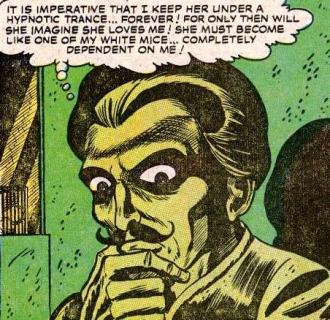
I’ve been a hypnotherapist for 14 years. During that time, I’ve seen hundreds of clients for a variety of issues. One of the first things I tell them is that hypnosis is NOT mind control. Myself, or any hypnotist or hypnotherapist, can’t make you do something against your will.
In fact, hypnosis is far less exciting than it may initially seem. Entering into a state of hypnosis simply means that your brain waves are altering. You are moving from a regular, alert and fast (beta) pattern to a calmer, more relaxed and slower (alpha) pattern. Sometimes, you can even slip into a pattern akin to sleep (Theta).
This is the first thing to remember about hypnosis. It’s not mind control, just a simple change of brain waves.
While this is happening, something else occurs. Your consciousness moves from the neocortex (thinking part of the brain), to the midbrain (home to the autonomic nervous system). The neocortex is analytical. When it is no longer engaged, you become more susceptible to suggestion. In other words, it’s easier for you to accept what you’re seeing, or being told, as real and true.
This can have both negative and positive consequences. One the one hand, you might be conditioned into believing in a lesser version of yourself and the world you live in (more on this in the next section). On the other, you have the means to program yourself into believing in the greatest version of yourself and a new, positive reality.
Either way, the importance of your subconscious mind (which is what you’re accessing when in a state of hypnosis) should not be underestimated. Research indicates (Szegedy-Maszak 2005) that 95% of your daily decisions and behaviour are governed by your subconscious. This means that you are only consciously in control of what you do 5% of the time.
This makes sense. How many people say to themselves, ‘I’m going to the gym after work tonight’ or ‘I won’t eat any chocolate/deserts today’ but end up staying at home watching Netflix while feasting on Ben and Jerry’s?
Despite their good intentions, they’re victim to programming that tells them, ‘I’ve repeated this pattern of behaviour so many times, therefore, it must be good and I will continue to do it today.’
This is the second thing to remember about hypnosis. Your willpower (your conscious mind), is weaker than your programming (your subconscious mind).
Therefore, if you want to use hypnosis for positive change, then you must alter your programming. Techniques for doing this will soon be explored.
HOW TO PROGRAM YOUR MIND
Maxwell Maltz, in his book Psycho-Cybernetics, theorises that there are three factors influencing the programming of our minds – Authority/Intensity/Repetition. In his own words,
“What we hear from a source we accept as authoritative – such as the father we see as omnipotent, from whom we desperately seek acceptance as a child – is given far more weight than the same statements if heard from what is to us at the time a less credible source. What we see, hear and experience with intensity – such as a father yelling at us, in front of others, making us humiliated – has added weight. And what we hear repetitively from authoritative sources has even more weight. Years after this programming has ceased, it may still be governing all sorts of behaviour.”
With this explanation, we can see how easy it was for us to become programmed as children.
At this age, virtually everyone is an authority figure. It could be our parents, our school teachers, our religious leaders, the TV we’re hypnotised by every day, our older siblings and even children older than us in school. All of them, at various stages in our childhoods and adolescence, will be telling us how the world works and what our role within in it should, and will, be. This can lead us to accept statements like,
- Nobody gets to be happy all the time
- Dreams never come true
- The individual can’t make a difference, you must adapt to the world and do you best to ‘get by’
- Only the exceptionally talented or lucky get to do something exciting with their lives
- You’re selfish for doing what you want
After years of hearing the same thing from people we revere, we unconsciously adopt this outlook. Without realising it, we accept an incredibly limiting world view which sets our operational boundaries. As a result, we won’t even bother trying to create a fulfilling life where we’re happy. Why would we, when we’ve been taught to believe that such a reality couldn’t exist?
POSITIVE PROGRAMMING
Your aim is to reverse this conditioning and use hypnosis for positive change. To do so, there’s something you need to know.
The third thing to remember about hypnosis is that it’s much harder to consciously program your mind for success, than it is to be unconsciously programmed by The System for failure.
This is because there’s one piece of the programming equation (Authority/Intensity/Repetition) missing when you attempt to do it by yourself. Research indicates (Dr. William Swann, University of Texas) that we don’t tend to believe ourselves when we affirm our greatness. Our own opinion lacks authority when attempting to influence our subconscious mind (this is especially so if you have low self-esteem).
So, what can you do?
The ‘repetition’ part of the programming equation is easy enough to fulfil. Sure, it takes discipline, but each day you can set aside 10 minutes (or longer), to flood your mind with positive thoughts and images about the person you wish to be and the life you wish to live.
The ‘intensity’ part of the programming equation is a little harder. You must practise long enough, and become sufficiently skilled, to ensure the thoughts and images you generate, are triggering some form of emotional reaction in your body. You must feel what you’re seeing. When you can do this, you can be sure your subconscious is accepting these thoughts and images as the truth. It then will act on them.
Back to the ‘authority’ part of the programming. As I’ve mentioned, research suggests that affirmation alone might not be the best strategy. Even my two instructions above are going to take a long time as they still position you as the authority figure. Therefore, to supercharge your programming, you must do one, or both, of two things.
1. Find an authority figure you respect to mentor, coach or support you. I spent five years trying to program myself with the belief I could be a best-selling author. This didn’t have half the impact as one sentence spoken to me by best-selling author Tom Butler-Bowdon. After reviewing my manuscript for How to Live your Dreams (which then became Escape The System), he pointed to one of the chapters and said, ‘this is excellent.’ This conformation, from an authority figure, instilled a belief in me that I could go on to write an excellent book.
2. Record your results. Since July 2003, I’ve noted down every significant positive result I’ve achieved in a journal. There are records of tennis and hypnotherapy clients gained, book sales, a publishing deal, coaching clients helped, tennis tournaments won and love found. These positive results are proof that I’ve become the person I set out to be. Whereas I may doubt my own voice telling me I’m great, my subconscious can’t deny books upon books of evidence that I have what it takes to continually move my life forwards. I strongly suggest you adopt a similar practise.
SELF-HYPNOSIS
Before I finish, you may want some quick, easy to follow steps on how else you can positively program your mind. While I’ve previously mentioned that the repeating of affirmations is not the most effective method of achieving this, I still find it important to take some form of auto-suggestive action. Here’s what I recommend you do.
Step 1: Block out 10 minutes of your day
Step 2: Go to comfortable room where you won’t be disturbed by either a phone or people.
Step 3: Sit in a comfortable position (If you lie down and you’re already tired, there’s a chance you might fall asleep).
Step 4: Fix your eyes on an particular point or object (I use a candle) and, ideally, position this slightly above your line of sight.
Step 5: While you stare at the object, notice your breathing begin to slow and your eyes getting heavier. When it’s comfortable to do so, let your eyes shut.
Step 6: Think about who you want to be and the life you want to live. Imagine it is happening now.
Step 7: Attempt to trigger an emotional reaction while doing this, so you can feel what it will be like to be that person and live that life.
Step 8: Open your eyes when roughly 10 minutes have lapsed.
Step 9: Repeat this every day, without fail.
Finally, before starting to program yourself in this way, there’s one more thing you need to know.
The fourth thing to remember about hypnosis is that, “ideas are changed not by ‘will,’ but by other ideas,” (Maxwell Maltz).
Don’t fight your issue. In fact, don’t even engage with it at all. If you’re struggling to get a girlfriend, and you believe it’s because of your looks, the worst thing you could say is, ‘I’m not ugly’ and try to will yourself into believing you’re good looking. Instead, focus on the new idea of you being a charismatic, fun person. Forget your looks entirely and become lost in this idea that you have a magnetic personality.
Likewise, if you’re overweight, the worst thing you could say to yourself is, ‘I’m not going to eat chocolate anymore.’ Instead, get obsessed with the new idea of being a healthy person and how fantastic this will feel.
What will your new idea be?
Make sure it’s compelling and appealing and then use it in the nine steps listed above.
Remember, your mind is powerful. In the words of Napoleon Hill, “Whatever the mind can conceive and believe, it can achieve.”
(image taken from Dex’s photostream flickr.com)
Revealing The Hidden Secret in Think and Grow Rich (and how to use the book)

Think and Grow Rich is one of the most popular self-help books of all time (some estimates point to sales of around 100 million copies).
In this blog post, I’m going to explore the most prescient ideas from the book and explain why, almost a century later, they still have the power to change your life.
First, we’re going to look at the DCA or Definite Chief Aim. Napoleon Hill (the author) believed everybody should have one and I’ll show you how to create, and use it, so you can realize your life’s purpose.
Then, I’ll explain the true value of Think and Grow Rich, breaking down Hill’s 12 Steps to Riches and explaining how to use each one in turn.
Finally, I’ll reveal The Secret to unlimited riches that Hill frequently refers to, but never explicitly states.
Creating your DCA
There are six steps to creating your Definite Chief Aim. Taken from the book, they are;
Step 1: Fix in your mind the exact amount of money you desire. It is not sufficient to say “I want plenty of money.” Be definite as to the amount.
Step 2: Determine exactly what you intend to give in return for the money you desire.
Step 3: Establish a definite date when you intend to possess the money you desire.
Step 4: Create a definite plan for carrying out your desire, and begin at once, whether you are ready or not, to put this plan into action.
Step 5: Write out a clear, concise statement of the amount of money you intend to acquire, name the time limit for its acquisition, state what you intend to give in return for the money, and describe clearly, the plan through which you intend to accumulate it.
Step 6: Read your statement out loud, twice daily, once just before retiring at night, and once after arising in the morning. As you read – see and feel and believe yourself already in possession of the money.
Let’s explore the implications of these 6 steps.
One of the key themes of Think and Grow Rich is definiteness of purpose. You must be certain about how much money you want. Therefore, when creating your DCA, you don’t use guestimates, hopes or wishes. Instead, set your figure with conviction.
How much money do you want?
For a moment, forget societies standards. This isn’t about being realistic. Instead, give your imagination free reign and be honest. How much money will it take for you to be financially free?
Whatever that figure might be (and be precise, down to the penny), write it down now.
Now, what are you going to do to achieve it?
You have to do something. Winning the lottery won’t cut it.
Do you know your life’s purpose?
If so, great. You already know the means through which you’ll generate your riches.
If you aren’t sure, then go with your best idea. Don’t over analyse. Right now, what’s the most inspiring way you can think of, that stands some chance of success, to make money?
Got that? Good, use it for your DCA (you can always choose something else further down the line if you find it more inspiring and there’s a greater chance you can make money from it).
When do you want to realize your DCA?
The importance of set dates, and an exact sum of money, is that it sends a clear message/instruction to your subconscious. The second section will reveal how important the subconscious is but, for now, know it can only help you, if you help it.
Giving yourself a lifetime to achieve your DCA will mean you won’t achieve it until it’s too late. However, if you instruct your subconscious that 10 or 5 years is the deadline, then it knows the urgency with which it needs to deliver the money-making ideas.
So, go ahead and create your DCA.
If you need a little help, here’s Bruce Lee’s, taken from the book Fighting Spirit,
“I, Bruce Lee, will be the first highest-paid Oriental superstar in the United States. In return I will give the most exciting performances and render the best quality in the capacity of an actor. Starting 1970, I will achieve world fame and from then onwards until the end of 1980 I will have in my possession $10,000,000. I will live the way I please and achieve inner harmony and peace.”
Bear in mind that his was written in 1969, before Fists of Fury or Enter the Dragon. At the time, Lee was an injured, out of work actor with mounting debts.
In his mind, however, he was a superstar and, what some might have called empty words, soon became his reality. Be bold.
The 12 Steps to Riches
Think and Grow Rich is not a wealth creating manual, it’s an idea generating manual. Don’t be fooled by the title. You won’t find any advice on investments or saving your money. However, what you will find, is a lot of information on how to access the ideas that are going to create your fortune.
Hill believes in an idea generating loop that looks like this. The conscious mind (if there is enough emotion behind your thoughts), can make an imprint on the subconscious. The subconscious mind shares a connection with The Infinite Intelligence (the source of all knowledge and creation). The Infinite Intelligence will send ideas back to you, in the form of hunches or flashes of inspiration, which are received through your creative imagination.
Sounds far-fetched, right?
It’s not.
I’ll use myself as an example. My DCA is to sell 1 million copies of my books and, because I’m passionate about this goal, I get hunches from The Infinite Intelligence. These hunches take the form of book ideas – I currently have six titles in the pipeline. However, it doesn’t end there.
The Infinite Intelligence also gives me ideas for where I might find opportunities to sell my books. For example, I had hunch that I should attend a YES Group meeting in London to listen to a speaker. While there, I bought his book, got chatting to him and found out which company published his work.
A month or so later, I emailed him, after reading and reviewing his book, and asked if he had any contacts at the company to whom I could submit a book proposal. He did, I did and, a year and half later, I had my own book deal.
Here are two very real things – book titles and a book deal – gained through ideas generated by The Infinite Intelligence. It works.
To ensure you can share in these wealth generating ideas, you must master Hill’s 12 Steps to Riches. They are as follows,
1. Desire – each day, think about what you want to achieve.
2. Faith – feel, and live, as if you’ve already achieved it.
3. Auto-Suggestion – programme your mind by reading your DCA and other affirmations or visualizations on a daily basis.
4. Specialized Knowledge – Become an expert at something. This will increase the quality of your ideas about the subject you intend to become rich through.
5. Imagination – Recognize a great idea when you have it.
6. Organized Planning – Each month, write a new plan on how to achieve your DCA.
7. Decision – Reach decisions quickly. A mind constantly wavering between two or more options doesn’t have the power to make a connection with The Infinite Intelligence.
8. Master Mind – An individual only has one connection with The Infinite Intelligence. A group of ten people, all with knowledge pertaining to the realization of your DCA, has ten connections. Take advantage of this and surround yourself with intelligent people willing to help you in a reciprocal relationship.
9. Sex Transmutation – Channel your sex drive. Take the motivation it creates and, instead of pursuing physical gratification, seek spiritual rewards through working on your DCA.
10. Subconscious Mind – See previous explanation.
11. The Brain – Your thoughts have power. However, it’s only the thoughts backed by deep emotion that will carry enough power to make a connection with other minds and The Infinite Intelligence.
12. The Sixth Sense – Follow steps one through eleven and The Infinite Intelligence will communicate with you through your sixth sense. Act upon these intuitions.
The Secret
Hill claims that a secret to infinite riches was passed onto him by Andrew Carnegie during their first meeting (the steel magnate gave Hill the idea for writing Think and Grow Rich). Although he spends most of the Introduction waxing lyrical about its importance, he never explicitly mentions what it is. Instead, he leaves clues, claiming it’s referred to one hundred times throughout the book and, at least, once in every chapter.
I’ve now read Think and Grow Rich three times. It was on my final reading that I finally deduced the meaning of the secret. Ironically, Hill gives it away in the first line of the first chapter when he writes, ‘truly, thoughts are things’. Furthermore, a quote included between chapters, in a later edition of the book, spells it out even more clearly.

Is this news to you?
Probably not. Essentially, it’s what’s become known as The Law of Attraction. Your thoughts, feelings and beliefs, whether you direct them consciously or not, attract the circumstances, events and outcomes of your life.
You should be EXCITED about this information. Right now, you’re being presented with a way to transform your life and create whatever it is you desire. Shouldn’t you be jumping up and down, celebrating in the knowledge that your life will be great from now on?
I bet you’re not!
I also think I know why you’re not. After all, The Law of Attraction isn’t really a law, is it? There’s no mainstream scientific study validating its’ claims. Furthermore, nobody outside the personal development world thinks this way. They all KNOW that events and outcomes are determined by chance and that only those lucky enough to be born with an amazing talent get to do something extraordinary with their life. For the rest of us, we just have to make do, accepting whatever role The System gives us.
But who wants to live like that?
Isn’t it worth experimenting with Napoleon Hill’s secret to see if there’s something in it? Why not give yourself six months to see if you can create some results by changing the way you think, feel and what you believe? If it doesn’t work out then you can go back to how you lived before.
But, what if, there happens to be something in this secret?
If it’s true, then you’ll never be the same again. This could be the moment you realize that YOU are the master of your destiny. You have the power to shape your reality through your connection with The Infinite Intelligence.
Surely this knowledge is worth far more than material riches.
(image taken from samhsloan@gmail.com photostream flickr.com)
What I Learned from being Fired 3 Times in 5 Months

Almost twenty years ago to the day, I got fired from a filing job at a major UK residential property developer.
I lasted four hours!
The manager called the temporary agency I was working for at the time and complained about my lackadaisical work ethic and lack of filing experience.
I couldn’t believe it. Who needs experience for a filing job? However, as I took my leave from the office and began the premature journey home to my parents’ house, it all began to make sense.
The day had started ominously. There were no pleasantries when I arrived, no shake of the hand or ‘how are you?‘. Instead, I was shown to a desk, some paperwork was dumped in front of me and I was told to file it.
Ten minutes in, I was bored out of my brain. Their instructions were vague and, I was so demotivated, I didn’t bother asking the manager for clarification. I just muddled through, making it up as I went along and counting down the hours until lunch break.
When I got the phone call from my agency, informing me of my dismissal, I was actually relieved. Despite being a little embarrassed I didn’t last a full day, I couldn’t wait to get out of the office.
The entire morning had been spent clock watching and contemplating my recent employment record. In the previous five months, I’d had six different placements. I’d been dismissed from three of them.
In the month leading up to Christmas, I’d worked in a retail store. At the time, they said I was needed for the holiday period and new year. After Christmas, they informed me they didn’t want me back.
After that, I had a two-week spell doing data entry for a local company. Again, they weren’t interested in keeping me on.
I then went to a local sign making factory and was put to work filing the steel and working in the post room. They fired me after a day.
The agency then thought it best to find me non-office related work. As a result, I was sent to wash dishes at a few different kitchens. This, I managed to complete without being fired. Although I didn’t enjoy the work, the shifts were shorter and, as a result, my boredom wasn’t as apparent.
Having managed to successfully see out these temporary dish washing contracts, the agency thought I might, once again, be ready for office work.
I wasn’t, though, and not only did the ‘four-hour firing’ episode bring an end to my time in this environment, it also brought a close to my reliance on agency work.
Follow Your Inspiration
As I made my way back home, I was buzzing. There was a question running through my mind.
I was done with boring jobs. I knew that. I wasn’t going to spend another hour of my life sitting in an office, wasting away. However, I was also contemplating whether I needed to do anything I didn’t enjoy ever again. Could I use this huge level of inspiration I was feeling as a guide and ride it all the way to the life of my dreams?
I’ve thought about that moment many times since. In some ways, it represents a crossroad in my life. However, rather than taking one path or the other, the conventional or the inspired, I set off walking a middle ground.
I never rode the wave of inspiration and I certainly did plenty of work and tasks I didn’t enjoy in the subsequent years. However, I’ve also followed my heart and made decisions based on what inspires me.
Now, having reaped the rewards of following my inspiration, I look back and wonder whether I could have pushed the envelope even further.
What would have happened if I did? Was there any potential failure or consequence so great it would have stopped me?
I ask these questions for two reasons. 1. I like to look back to learn for the future. 2. It might bear some relevance to you.
It’s no secret that worker satisfaction levels are pitifully low. I mention in my upcoming book ‘Do The Work you Love’ that, according to 2012 Right Management survey of the US and Canadian workforce, 81% of people in employed roles don’t enjoy their jobs.
Perhaps you are one of these people. Perhaps, like me twenty years ago, you’ve wondered whether you can just walk out on your job tomorrow and let your inspiration guide you to a new life.
Is it possible?
After twenty years of tentatively following mine, here are my thoughts.
The Journey
In short, my answer is ‘Yes’. I believe it would be possible to quit your job tomorrow and use your inspiration as a guide to create, and live, the life of your dreams. However, before I elaborate on my thinking, let’s define what following your inspirations means.
Following your inspiration means making decisions based on what excites you the most. For example, let’s say you’re inspired by the idea of writing screenplays. You already know that your present job, as a financial analyst, is not your dream, so you quit and begin a new adventure.
You hand in your notice (in practise, you might then have to work a few more weeks) and start working on your first screenplay the very next day.
It’s great fun. You’re learning every day, making progress and excited about the end product. You continue working away, regardless of your financial situation, because this is what inspires you. This is where the magic is at.
Months down the line, when the screenplay is finished, you begin shopping it around. Perhaps you’re successful and, only a few weeks into looking for interested parties, a studio wants to buy your script.
More than likely, you’re not and, as the months continue to pass, financial concerns start to play on your mind. You realise that, while you continue to shop your screenplay, you’re going to have to get another job. Of course, you don’t want to repeat your previous mistake and get trapped in a job you don’t enjoy, so you look for work that interests and excites you.
Perhaps you find it. Perhaps you don’t. Ultimately, you might have to take any job you can get in order to pay the bills. However, you’re still following your inspiration because you haven’t given up on your dream.
While working, you keep searching for interested studios or agents. If that continues to fail then, maybe, you shelve your first project and begin working on a second. You learn from your previous mistakes and create a superior script. Once complete, you again look for interested parties.
You keep repeating this pattern until you’re successful. Or, perhaps, you reach a point where writing screenplays no longer inspires you. Instead, you become more excited by the idea of taking your newfound writing skills and creating a health and fitness blog.
Perhaps the blog is successful and maintains your interest. Perhaps it doesn’t.
By now, you should understand what living an inspiration led life entails. You keep going and going, either being successful at making a living from your passion or, being inspired by a new idea and making a go of that.
Of course, while walking this path, you may have to do stints of paid work you don’t enjoy. Don’t worry if this is the case. So long as this doesn’t become your main focus, and is only undertaken until you’ve saved up enough money to make another concerted effort at making a living from your passion, then it’s ok. Eventually, you will hit upon an idea or a career that both inspires you and generates enough money for you to live on.
This is what following your inspiration looks like. Yes, it’s risky and you may have little money for vacations and consumer items. You may even be constantly on the verge of going broke. However, you’re alive!
You know why you’re living and every day is filled with purpose. This more than compensates for all the ups and downs and uncertainty you experience in the lead up to becoming successful.
But what happens if your inspiration is telling you to quit your job yet you don’t have a clue about what you might do? Can you still take the risk?
What to do if you Don’t have a Clue
Twenty years ago, I had no idea what my dream might be. As I walked back home, buzzing off the combination of a brilliant song and an exciting idea, my energy levels were at a peak. However, as great as I was feeling, there was no immediate outlet to channel my energy.
What do you do in a situation like this? Can you still quit your job the next day, simply believing you’ll find something?
If you decide to take this risk then you must master your energy.
To have an inspiring idea, you must be inspired. Release all of your doubts, fears and questions. Only then will you have the clarity of mind needed to discover an outlet for your inspiration.
It might take you a week, six months or even a year. However, if you remain inspired, regardless of what’s going on around you, a path will emerge.
It’s also important to realise this path might not lead you into a new career or business idea. It may simply lead you to travel. Or, perhaps, like Gregory Howe, author of the book Chasing Points, it might encourage you to set out on a new adventure – aged 34 he decided to quit his job as a school teacher and pursue his long cherished dream of becoming a world ranked tennis professional.
Whatever the case, the longer you remain inspired, the greater the chance you’ll discover an outlet to support you in a way that brings excitement and meaning. New acquaintances that lead to inspiring work can be made while travelling. An adventure, even if unsuccessful, might develop the character and skills needed to be successful in another endeavour. (While Gregory Howe didn’t become a regular fixture on the professional tour, he was able to write a book about his experiences and make money through the sales).
Inspiration is the source through which all of your great ideas flow. Therefore, don’t worry about the temporary loss of income caused by quitting your job. Instead, do whatever it takes to stay inspired and see where the path leads you.
Conclusion
I don’t want to tell you what to do. Afterall, everybody’s situation is different and I couldn’t possible know your circumstances. At best, all I can do is share my experiences with you and hope that something strikes a chord.
Despite my enthusiasm, I didn’t follow my inspiration all the way to the life of my dreams. Sometimes, I ignored it and made decisions based on what I believed were financial necessities at the time. As a result, I can’t say with any certainty what would have happened on that day, twenty years ago, if I’d refused to do anything that didn’t inspire me and lived in accordance with my heart. However, having lived a semi-inspired life since then, I can offer you some insights.
I don’t think basing all of your decisions on what inspires you is a recipe for disaster. In fact, the penalties for doing so are more psychological than real. Unless your dream requires you to put your life on the line, or take long term risks with your health, there is nothing to fear.
What are the consequences of starting a new business and failing?
You might lose a substantial amount of money. As a result of this, you might have to move back in with your parents. You won’t be able to buy the things you like or go on vacation. Savings you were setting aside for your first home may have gone.
While all of these outcomes are undesirable, none of them are life threatening.
Let’s look at another scenario.
What are the consequences of pursuing your dream of being a successful actor and failing?
Again, you might lose some of your savings while you support yourself on this adventure. Furthermore, for the five or so years you were trying to make it as an actor, other areas of your life, like relationships, may fail to advance. Then again, perhaps you’ve met some fantastic people on your journey and fallen in love.
Certainly, you’ll have fallen behind your peers in mainstream work. If you were to now re-enter, you might have to bear the indignity of them being in senior positions to you.
Again, I ask you, are any of these consequences life threatening?
No, none of them are. The money can be recouped and the relationships rekindled. The only damage you might suffer is to your self-esteem and this can be protected. Furthermore, surely, you’d feel better about yourself for having tried? Theodore Roosevelt once said,
“The credit belongs to the man who is actually in the arena, whose face is marred by dust and sweat and blood; who strives valiantly; who errs, who comes short again and again . . .
who spends himself in a worthy cause; who at best in the end knows the triumph of high achievement, and at the worst, if he fails, at least fails while daring greatly, so that his place shall never be with those cold and timid souls who neither know victory nor defeat.”
and I agree. The worst-case scenario is that you get to the end of your life and regret never having followed your heart.
Therefore, you have two options.
You can be like me, adopting a ‘dip your toe in the water’ approach to following your inspiration and take years upon years to be successful.
Or, you can plunge straight in, run the risk of enduring some scary moments and trying times, but potentially transform your life in a matter of a few years.
The choice is yours. Just don’t spend your life playing it safe, never having known what it feels like to be alive.
(image taken from LeonH photostream flickr.com)
How to Sell 1000 Copies of your Book (without paying for advertising)

On Thursday 29th of November 2018, it happened! While attending a training day for a writing project I’ve been recruited to work on (will share the details with you soon), the one thousandth copy of my book was sold.
I was delighted. There was a sense of inevitability as I’d reached 999 sales the night before after selling some copies at a meet up group I run, but it was still fantastic to achieve this milestone. Doing so, brought a close to a six- and three-quarter year journey!
It took me six weeks to sell the first copy of my book, Screw The System (launched February 2012).
It then took me a year and four months to cross the 100 copies sold milestone.
It was a further five and a half years to then reach the 1000 copies milestone.
During this journey, there have been title and cover changes, updates and a new book released and then retracted. It’s been emotional. Many times, I’ve been at the point of despair (wondering whether my life’s work might have been for nothing), only to rise to the pinnacle of elation (when receiving a meaningful email, review, endorsement or in-person comment about my work). With time, I’ve grown wiser. I’ve learned there’s a process to this book selling game.
I’m going to share it with you now. I’m doing this because there’s something important you need to know. If you believe you have a message to share with the world, are prepared to spend endless hours crafting it into a book that’s readable, interesting and flows and won’t give up in spreading this message to as many people as possible, then I GUARANTEE you’ll also reach 1000 sales (and, very likely, far beyond).
For, if I can achieve this goal, with no budget for advertising, no initial audience and NO CLUE about marketing and promotion (at least, initially), then anyone can.
The First 100 (February 2012 to July 2013)
Let me take you back to the 8th February 2012. For a moment, my finger hovered nervously over the ‘enter’ button on my keyboard. Then, I pressed it.
After four years of working on my book, Screw The System, I finally self-published it on Amazon. I’d rewritten it a painful 3 times. However, despite all the ups and downs, I was certain it was going to be a success.
It bombed.
As the weeks passed, and all I could see on my Kindle Direct Publishing results page was a big fat zero, I started to wonder what was wrong. Naturally, I questioned the book. Perhaps there was something wrong with the title? Maybe the idea of ‘screwing the system’ was too unclear or too aggressive?
What I know now, but didn’t then, was that this perceived failure had little to do with the contents of my book, or its title. Instead, I was making a fundamental error. I was attempting to sell a book before building an audience.
How the hell was anyone to know my book was on Amazon?
Even in 2012, the market was saturated. There were hundreds of thousands of self-published titles to choose from, plus all the conventionally published ones. Furthermore, I hadn’t notified any of my tennis coaching and hypnotherapy network about the launch. I didn’t have an email list. Hell, I didn’t even have a landing page or website. Finally, my social media activity was severely limited, having only joined Twitter and Facebook the previous month. And yet, for some reason, I naively assumed the book would sell itself.
Eventually, a few did, and a trickle of sales began. However, the pace was slow, averaging about 1 a week.
A couple of strategies gave me a boost on my journey to selling my first 100 copies. A guest blog post for MindValley and, later in the year, PickTheBrain, gave me an additional 20 sales (in total). I wrote articles for them and, in exchange for this content, they allowed me to leave a link to my book at the end of the post.
My writing mentor and friend, Tom Butler-Bowdon, sharing my book (for the first time) with the subscribers to his email list, as part of a Christmas offer, also generated around 15 sales. Apart from that, I scraped along for a year and half, desperately hungry for book sales, but not knowing how to generate them.
August 2013 to November 2015
Selling my first 100 copies felt like an achievement. However, taking a year and a half to do it was never going to get me anywhere close to where I wanted to be.
I needed to come up with a new strategy. Unfortunately, at the time, I was still focusing on the contents and packaging of the book.
After studying a ‘Kindle Krusher book selling course’, I’d convinced myself that the title of my book was all wrong.
Screw The System is putting people off, I rationalised. It’s alienating personal developments large female audience. It’s not presenting a positive direction for the reader to follow. I wasted hour upon hour trying to come up with new ideas and worrying about the implication of having to rewrite parts of the book if the title change was too great.
On the subject of wasting time, it was during this period I put a lot of effort into growing my social media presence. Despite google analytics revealing Facebook and Twitter weren’t driving much traffic to my website, I persisted with allocating approximately half my time to creating thought provoking posts that had very little impact.
The one thing I did get right was increasing the number of guest blog posts I wrote. A seminal article on how to generate website traffic alerted me to this strategy. From November 2014, I began writing close to one a month. These mainly drove subscribers to my website, but they also had the knock-on effect of increasing my book sales on Amazon. However, as December 2015 rolled around, I still hadn’t registered 400 sales.
I did have something up my sleeve, though, and unbeknownst to me, my fortunes were about to take a slow upward turn.
December 2015 to March 2018
Throughout most of 2015, I’d been rewriting Screw The System. Although happy with the original version, after 3 years of reading other personal development sites and doing my own blogging, I could see ways to improve. I also finally chose to change the title and cover, opting for the not too dissimilar Escape The System.
Along with the updated content, I had a new strategy. After devouring the content of business building website (Fizzle), I decided to launch Escape The System to my email list (as a PDF sold through my website) rather than on Amazon Kindle.
It did ok. Although I only made 15 sales, it was the highest concentration of purchases I’d experienced over a seven-day period. Furthermore, with a subscriber base of just below 700 (at the time), and a typical email open rate of 20%, the conversion rates were respectable.
A light went on. Perhaps email marketing works!!
Something else changed at the start of 2016. I began contacting personal development groups in London, looking for speaking opportunities. My first was at Inspire’d Stage, and the positive reception switched me on to the idea of selling my book off the back of a successful talk. More followed, as I spoke at Interesting Talks twice, Live your Legend a few times and a few other meet up groups.
Although the audiences weren’t large (at their peak 60, dropping down to 10 at the smaller groups), typically 10% to 20% (and once 25%) of them would go on to buy a book.
All the while, my Amazon Kindle sales continued to trickle in. The title and cover change did little to boost sales, but, with time, I began to average two, instead of one, sale a week.
Unfortunately, during 2017, guest blogging became a redundant strategy. My go-to website (Pick The Brain), like many other personal development sites at the time, stopped showing the amount of social shares an article received. The option to share the article (on Facebook, Twitter, LinkedIn etc) was still there, but now that the number of shares was no longer visible (e.g. an article has received 1000 shares on FB), it appeared to disincentivise people to share (don’t ask me why). However, as one door closes, another opens.
The Home Straight (April 2018 to November 2018)
At the start of April 2018, I sold my 800th copy. Feeling inspired, I set myself a goal.
It had taken me ten months to sell the previous 100 copies, so I wanted to sell the next 100 in nine. This would have been impossible to achieve if I hadn’t had a new book in the pipeline.
Throughout the tail end of 2016 and all of 2017, I’d been writing ‘How to Create an Income Without Working a Boring Job’. By April 2018, I was in the final stages of editing the book and preparing for the launch. By June, it was ready.
Encouraged by the launch of Escape The System, I decided to use email marketing to maximise my sales. I offered the book at a discounted price (for one week only) and then emailed my subscribers with a link to buy.
This time, rather than selling the book through my website, I sold it through a third-party site called Gumroad. The downside was that they kept a small (but fair) percentage of the sale. The upside was that their platform offered the possibility of selling the book in more than one way.
When emailing my subscribers, I gave them the option of purchasing ‘How to Create an Income Without Working a Boring Job’ on its own, or as part of a bundle deal with Escape The System. I made the bundle only $1.50 more expensive and, to my delight, this greatly increased sales.
In total, this launch brought me around 50 sales (counting a purchase of the bundle as two). Two more campaigns followed, the first through my author friend Thibaut Meurisse, and the second through Tom. On both occasions, the book sold well, with the bundle constituting the majority of the sales.
These campaigns ensured I smashed my goal of selling 100 copies in nine months. I did it in five. So, I then set myself the goal of selling the next 100 in four.
Tom and Thibaut’s email campaigns ran into this time period, bringing me an additional 60 plus sales. I also featured at the Laptop Lifestyle Bootcamp weekend event as a speaker and the organiser bought 10 copies of Escape The System to give away as prizes. These, combined with the low, but continuous, sales of my first book on Amazon, ensured I reached my next 100 in only three months. Finally, I crossed the 1000 sales milestone.
Book Selling Tips

Above is a breakdown of my 1000 sales. Although Amazon Kindle constitutes the largest portion (with 40% of the sales), don’t be fooled into thinking this was the most effective sales strategy.
Escape The System has been available to buy on Amazon (in one form or another), since February 2012. That’s over six and half years. In that time period, it’s only sold 400 copies on Kindle and 180 in paperback. Compare that with only five email marketing campaigns bringing me 150 sales, and you can see where you should be directing your attention.
For more tips, read the list below.
- Create an audience prior to launching your book. Do this by building an email list (most effective), developing a social media presence (least effective) and telling people you know (more effective than you’d think). Then, create a book for them to purchase, offer a discount and direct them to a page where they can buy. You could send them to your Amazon page (although Amazon will get a larger percentage of the sale and you’re unlikely to be able to charge as much) to buy the book. Thibaut Meurisse does this with his book releases and it has the added benefitting of bumping him up the Amazon best seller’s rankings list, thereby enhancing the visibility of his book to new readers.
- Create a paperback version of your Kindle book (or vice versa). Amazon gives you the opportunity to sell your book in two formats, so take it. I discovered that my Kindle sales were greater than my paperback sales by about 3 to 1.
- Having two or more books available for purchase is a great way of increasing your sales. Although for over 6 years of my journey, I only had one, I couldn’t deny the immediate impact of being able to offer a bundle purchase. It creates greater value and makes it almost impossible for the customer to refuse. I can’t testify to the impact of having two titles available on Amazon as I’ve not launched my second book on this platform (the reason why is explained in the following section). However, from speaking to other authors, it always tends to be positive.
- Social media can be an effective method of selling, but you need to go about it in the right way. Simply posting a link to your newly released book is unlikely to work. This is because Facebook’s algorithms deliberately slash the reach of posts with links. This means less of your friends or followers will see. Instead, build the story of your book. Let your readers know when you’re writing it. Tell them when it’s finished. Consult them about options for the cover. Hype the release. Perhaps use a picture of yourself and the newly delivered paperback books from Amazon to let them know it’s available. And then, instead of posting a link, simply tell them to comment or send you a direct message if interested (you can then send them a link). If you use this strategy on Facebook, then do so on your personal, not fan, page. Again, Facebook slashes the reach of posts you make on your fan page (they want you to pay for advertising) and I’ve never found that my followers are particularly interested in my work (they just want to ‘like’ pictures with quotes).
- Replicate the ‘build the story of your book’ strategy with your email list. However, you’ll obviously want to send them a link, and include multiple calls to action, in the email.
- Tell people about your book. Don’t be shy about promoting it. If a new acquaintance asks about what you do, then mention you’re an author or you’ve just written a book. I know that the imposter syndrome can make you feel hesitant about pitching yourself in the way, but I’ve found that most people are interested or supportive and you might even pick up a few sales.
- Set sales goals. Part of the reason I was able to achieve 20% of my sales in the final eight months of my six- and three-quarter year journey, was goal setting. It motivated me and gave me a focus. I’d programmed my subconscious with what I wanted to achieve, and the exact time frame in which it was to be accomplished, and, in return, it provided me with answers on how to get there.
- Note the low number of sales I received through my website (only 3%). For some reason (possibly lack of trust), readers weren’t interested in buying the book through my website. They bought if I directed them there through an email campaign, but random sales almost never occurred. If your experiences are the same then don’t spend a whole lot of time decorating or promoting this page.
- Forming partnerships is the key to successful email marketing campaigns with other authors or influencers. How to do so is another blog post unto itself. However, if the connection is genuine, you like their work, have met them in person and are willing to reciprocate, then other authors and influencers should be happy to promote your books to their email list.
- Ask for reviews. Although I can’t say I saw a huge increase in sales from having close to 40 five-star reviews on Amazon, compared to when I just had 5, it might possibly create an air of social proof that encourages purchases. I’ve certainly had people comment in conversation about how they were impressed by the number of 5 star reviews I’ve received. To get reviews, simply ask the people who comment positively about your books via talks, in person, on social media or email, if they wouldn’t mind leaving a review. Most will do it.
The Future
My book selling story doesn’t end now that I’ve reached 1000 sales. I’ve got big dreams and my next goal is 10,000. Ironically, this might be easier to achieve than the 1000 mark. This is due to the recent book deal I’ve been offered by a UK publishing company.
During November of this year, Watkins Media contacted me in response to a proposal I submitted to them for ‘How to Create an Income Without Working a Boring Job.’ They liked it and after meeting me and running some figures, presented a contract.
This was a fantastic boost. I’ve grinded out almost 7 years following the self-published route and now I get to see how being a published author impacts my sales. My hope is that the arduous task of building an audience will be, somewhat, mitigated as my book appears in bookstores up and down the country and overseas. I can’t now launch ‘How to Create an Income Without Working a Boring Job’ on Amazon, as the publishing company want to be the ones to officially release it at the start of 2020. However, I’m sure it will be worth the wait.
As I think back on my journey, and all the highs and lows I’ve experienced, my mind returns to June 2015. At this point, for some reason, I couldn’t get off the 337 sales mark. I didn’t make a single sale for at least a month, perhaps longer. Despite all the effort I’d put into making my book as good as possible, and all the time I’d spent learning how to market and promote, nobody was buying.
I felt like I was at a crossroads. After 8 years (including the writing period between 2007 and 2012) invested in the project, what did I have to show? A handful of sales and a revenue stream that didn’t even stretch into four figures. Surely, under any reasonable measure of attainment, I was a failure.
Fortunately, I didn’t see it that way. Ever since I’d begun my journey, I’d been recording my book sales. I noted every single one down in my diary as a positive result. Therefore, when it came to difficult moments like June of 2015, I had 337 reasons to continue.
I could have seen it differently. Perhaps most people would. They might have looked at the length of time it took to achieve those sales, and the effort that went into getting them, and ask whether it was worth it.
Furthermore, they might have looked to examples of authors who’ve released their first book, and gone on to sell a million copies in the same period of time it took me to sell 337, and made comparisons. They might have said ‘that’s what happens if it’s meant to be. You’re clearly not supposed to make a living from being a writer if this is how long it takes.’
I would have been justified in thinking like this. However, if I did, I’d have never gone on to get a book deal and sell over 1000 copies.
Although proud of my achievements, I’m far from an expert. Six- and three-quarter years is far too long to sell 1000 copies. Please learn from my mistakes.
- Use social media effectively, but don’t waste too much time on it.
- Don’t waste time deliberating over small details like the title of your book and cover. If it needs improving, then improve it quickly.
- Don’t be shy. Your book is unlikely to sell itself, so go out and tell people about it (when appropriate).
- Don’t get hung up on your first book being perfect. It’s got to be good, but in the time you take agonising over every paragraph, you could have written another two or three books and vastly increased your sales.
- Don’t release a book without having an audience (I hope you’re getting the message now). Spend a couple of years blogging first. Perfect your craft. Build you audience. Then, release your masterpiece. If done correctly, you might make your first 1000 sales within a few months.
Before ending this blog post, I want to say a big thank you to everyone who has bought a copy of my book. Some of you have even bought multiple copies and then gifted them to friends. Some of you have written fantastic reviews on Amazon. All of you are hugely appreciated. I couldn’t have done it without you.
The Uncomfortable Truth about “The Secret”

Last night, I watched The Secret on Netflix. Despite this movie/documentary being made in 2006, and despite me working in the personal development world, I’d never seen it before.
I’d heard a lot about it. I knew that it’d been a personal development phenomenon – selling 30 million copies of the book – and introducing a new audience to the self-help world. I also had a good idea what The Secret was about – hence me never watching or reading it. However, I was slightly sceptical.
I’d heard a lot of criticism about The Secret and The Law of Attraction. Pseudoscience or New Age nonsense is a label that’s commonly applied. I believed it was too simplistic. Miracles manifesting in a matter of months. It didn’t measure up with my experience of changing my life. However, despite all this, I was pleasantly surprised when watching the film.
My only criticism was the production of the documentary (and on a tight budget the producers can be forgiven for this). Some of it did come across as a little cheesy and dated and the ‘movie sections’ lacked polish, giving the film a ‘made for TV’ feel. However, Hollywood gloss isn’t the reason people are watching The Secret, so let’s explore its message.
The Law of Attraction gets a lot of criticism. The main gripe is that it isn’t really a scientific Law. Unlike The Law of Gravity or the speed of light etc. . it, SO FAR, it hasn’t been proved. Does this mean it lacks credibility? Furthermore, Is everything that can’t be proved by science worthless?
It’s interesting that, to my knowledge, The Law of Attraction hasn’t been disproved either. The fact is, it hasn’t been tested. Nobody has conducted a series of experiments to check the validity of its claims. Perhaps, and this is why we have no results or findings, we presently don’t have the technology to make any measurements. We can’t see the direct correlation between a raise in mood or energy and subsequent positive events occurring in a person’s life.
I’m sceptical of science. I don’t doubt that it’s discovered some amazing things about how our world works, and brought advances that have massively helped the cause of humanity. However, I don’t agree with the God like status that scientists, doctors etc. are granted in our society and I certainly don’t believe they know all the answers.
As an interesting aside, the speed of light isn’t actually a constant. Despite scientists telling us it’s fixed at 299 792 458 m / s, there’s a lot of evidence to suggests it varies. (Dr. Rupert Sheldrake talks about this in his book and talk ‘The Science Delusion’ if you want to conduct further research.)
Anyway, back to my point. Just because science hasn’t proved The Law of Attraction, doesn’t mean it’s without merit. The basic idea is that YOU attract the circumstances and conditions of your life through the way you think and feel. You have an energy or, vibrational frequency, and this is transmitted to the Universe which responds with the physical equivalent.
It’s both an interesting, and liberating, theory. It means that, through your thoughts and feelings, you can direct and shape your life in a way you desire. You can be happy, healthy, achieve all your goals and experience love. There is nothing stopping you apart from the mastery of this ‘law’.
I agree.
While The Law of Attraction can’t scientifically be described as a ‘law’; it operates close enough to this definition to be effective. I’ve turned my entire life around through changing my thoughts and feelings. On many occasions, which I’ve documented in a diary spanning 16 years, I’ve changed the outcome of a tennis match, my ability to attract women, injuries and my ability to help clients, through raising my energy. There was a direct correlation. Higher energy (better mood) = improved outcomes. I don’t need a scientist to tell me this. I’ve conducted my own experiments and proved it to myself.
The Secret gives an excellent and easily applied explanation of The Law of Attraction. Think about the outcome you desire as much as possible and feel how you would feel if this outcome came to pass. Furthermore, always think about what you want. If you ever catch yourself thinking about the things you don’t want, then immediately correct this thinking and redirect it towards to something positive.
The Uncomfortable Truth
A major criticism of The Secret is that it claims each individual is responsible for ALL the events and outcomes in their life. This means that if you have cancer or a failed relationship, or get fired from your job, it’s because of something you thought and felt for a sustained period of time.
This triggers a lot of people. It’s an uncomfortable truth that challenges their notion of being a blameless victim. ‘I don’t deserve this’ they say. It’s cruel.
To some extent, I agree. You would never say to someone who has just been diagnosed with a terminal illness, ‘you brought it on yourself.’ However, I think people who despise The Secret or The Law of Attraction for this reason are missing the point.
Rather than blaming you for what has happened, you’re being given the key to change and recover. The film documents two cases of people who have bounced back from life threatening situations by using The Law of Attraction. The first, is a lady who healed herself of breast cancer in 3 months. The second, is a man who recovered from a plane crash that broke his back and crushed his diaphragm.
So, rather than focusing on blame, think about responsibility. If you take total responsibility for all the events and circumstances in your life, irrespective of how bad they are, you can then start to move towards a solution.
Finally, the issue of time scales must be addressed. On this point, I am slightly critical of The Secret. In the film, the author Jack Cranfield talks about how he manifested a $100,000 income in a matter of months. It all seems so easy.
My experience has been anything but. I’ve struggled for 16 long years to turn my life around. I’ve been successful, but it’s been the fight of my life. To see people talking about realising their desires in less than half a year is difficult to comprehend.
Again, though, this could just be a fault in my approach. Notice how I use the words ‘struggle’ and ‘fight’ in my previous paragraph. The Law of Attraction indicates that if one believes they need to struggle and fight against their conditions then they’ll receive more of this experience. Perhaps my own slow progress is a result of the internal battle that has been raging inside me throughout this time. And, if I could just believe with greater clarity, then I’d have achieved my desires far more quickly.
I can accept this criticism. In fact, I want to believe it because of the opportunity it presents. If I can let go of the struggle, then the possibilities for rapid manifestation are very appealing.
In conclusion, I couldn’t find much to fault in The Secret. Yes, The Law of Attraction isn’t a bonafide scientific law, but that won’t stop it from working in your life. My advice is to USE IT!
How Strong is your Will to Survive?

My Grandma died last month. She was one hundred and one, 2 months shy of her one hundred and second birthday.
Over the years, I watched her pass through the various stages of deterioration. Amazingly, she was still walking and completely independent up until the age of 96. At that point, she had a fall, lost her confidence and, from then on, relied on a walking frame.
Despite this setback, she fought to maintain her independence and remained in her home until she reached her 100th birthday. She then moved into a local care home.
While in the care home, she still battled away. I visited her 3 times a year (my mum would make the journey to Yorkshire monthly). Throughout this time, her spirits remained high. She had little to do, as she spent more and more time in her chair, but she was always happy to see us and her mind was focused on living. Even as her eyesight began to fail, and she could no longer watch TV or read, she was still, largely, positive.
Then, after a visit from her new born great grandson, she started to weaken. She reported feeling tired and a couple of weeks after that, lost the ability to swallow.
This was the beginning of the end. At that age, no intravenous fluids are administered and the human body typically lasts no more than three to four days without water.
She lasted five.
I was with her two days before she passed. Despite being laid out in bed, unable to see, eat or drink, she still fought on. I heard the continual cycle of shallow gasps, followed by about five minutes of regular breathing, and wondered what she was living for?
Why did she hold on?
Keep Fighting
My Grandma always had a strong survival instinct. She never talked about death. She didn’t even talk about getting old. She just wanted to live.
At times, I wondered why.
During her final year, her quality of life was negligible. In fact, it had been diminishing ever since she’d had the fall aged 96. She had very little to do (being immobile) and very little stimulation. Human contact was all she had. My mum visited regularly and so did a couple of local friends.
That being said, she still spent a large amount of time on her own, in a bedroom, with only the noise of the TV to entertain her.
‘What kind of life is this?’ I thought, when I visited her the time before last. ‘Why doesn’t she just give up and let go? I would in a similar situation.’
However, now, I’m not so sure. Being with my Grandma in her final few days filled me with a huge sense of admiration. She had nothing to live for yet kept on fighting.
The family theory was that she’d been living to meet her great grandson and, once she’d done this, she gave up. I disagreed. While she was undoubtedly looking forwards to meeting Arlo, and it certainly gave her something to live for, there just simply wasn’t any quit in her. Life had to be taken.
Of course, in the end, it was. Even the people with the strongest survival instincts will eventually have their light extinguished. However, this isn’t the point.
We need to focus on the lessons these fighters can teach us. Why do they cling to life so desperately?
Is this all we’ve got?
You may not like my answer and, secretly, I hope it’s wrong. Watching my Grandma cling to life so desperately, when she seemed to have nothing to live for, made me think this is all we’ve got!
No heaven or hell or afterlife or spiritual dimensions. When that mortal light goes out, that’s it. Game over. We cease to exist in any shape or form.
Perhaps, subconsciously, we know this. We know there’s nothing else and that’s why we place such a high value on survival, even when our lives are shitty.
Of course, you may point to suicide – the number one killer of men in England and Wales between the ages of 20 and 49 – and claim it shoots down my theory.
Maybe so. Then again, people who voluntarily kill themselves would almost certainly be categorised as mentally ill and, therefore, not acting in their right mind.
Whatever the case, it’s clear the desire to survive has a lot to do with not wanting to lose the gift of life.
I understand this. When you stop to think about it, life is magical.
You get to wake in the morning, see a brilliant sunrise and listen to the birds sing. As I write this, the sun is descending and there’s a majestic red hue to the blue sky. Sights like these are precious. Still, they only represent the tip of the iceberg when it comes to the experiences life offers.
What about love? You can have an amazing spiritual and physical connection with another being which makes you feel alive in ways you never imagined possible.
What about creation? Whether it’s a child, a book, a product or a project, you get to create something that might have an inspiring impact on another person.
And what about the arts and sports? You get to listen to music which moves your soul, watch films that inspire and connect with a deeper part of your being and see paintings that transport you to another place and time. Then, you get to move your body in incredible ways, overcome challenges and feel the thrill of succeeding.
Furthermore, you get to explore. You get to discover the richness of life on earth, taking in all the spectacular scenes, smells and people.
Finally, what about being? Without any stimulus at all, you can still experience those quiet, still moments and feel connected to life.
When faced with oblivion, I could see why someone would want to cling to this with everything they’ve got.
Final Thoughts
My purpose in writing this is not to challenge your hopes or beliefs in an afterlife. It may well exist. Instead, my intention is to get you to appreciate the magic of being alive.
If this is all we’ve got, then you must make the most of it. Give more than ever, both of your talents and help when it’s needed. Dare to go for what you want. Fearlessly explore the avenues that could lead to greater love, freedom and expression. Appreciate each breath you take, each meal you eat and every sunset or full moon you see. Recognise it for the gift it is.
And, above all, don’t waste your time. Don’t spend your life doing things that make you unhappy. Don’t get distracted by mindless TV, trivia, social media or the internet. Don’t allow anxiety to take residence in your mind and prevent you from experiencing life to the fullest.
Live as much as you can. Get as much as you can out of life. Cling to it with every breath you have.
This is the lesson I took from witnessing my Grandma in her final few days. It reminded me of the Dylan Thomas poem ‘Do Not go Gentle into that Good night’. I don’t know whether my Grandma was a fan, but, somehow, it seems relevant.
“Do not go gentle into that good night,
Old age should burn and rage at close of day;
Rage, rage against the dying of the light.
Though wise men at their end know dark is right,
Because their words had forked no lightning they,
Do not go gentle into that good night.”
My Mum read a eulogy at my Grandma’s funeral. Towards the end, she talked about the lessons she’d learned from her. With this being a personal development website, I thought it appropriate to end with them,
“Stay active, have an enquiring mind, take on new hobbies, never think of yourself as old and never leave the house without make up!!”
IN LOVING MEMORY OF JOYCE THOMPSON, 22ND NOVEMBER 1916 – 12TH SEPTEMBER 2018

(Picture n1: Taken circa 2002, me and my Grandma.)
(Picture n2: Taken in Northallerton, North Yorkshire on the morning of my Grandma’s funeral. In the background are the Hambleton Hills, her birthplace.)
Why you Shouldn’t Give up on your Dreams

I was talking to one of my tennis students today about her interest in drama and singing. I suggested she might want to pursue it professionally when she left school or university.
Her response was that it would never work. Apparently, to make a career as an actress you have to be incredibly lucky. She also mentioned that most people performing in West End shows are barely able to make a living.
I was disappointed to hear this. I don’t know how passionate she is about acting (I know she likes it a lot), so I don’t want to presume that it’s her dream. However, I was more disappointed to hear that a 15 year old already had this kind of belief system.
Where did she get it from?
At a guess, possibly parents and friends, most likely from fellow students or teachers at her drama class and receiving rejections from auditions. All of these voices and experiences, when delivered from figures of authority we’ve been taught to respect, bypass the critical, reasoning faculty of our mind and form limiting beliefs in our subconscious. We accept them as The Truth, but do we ever take time to analyse or attempt to discredit them?
The conversation reminded me of my own thinking when I was 22. At the time, I wanted to write a best selling personal development book but all I heard from my parents, another author and the media (reading magazine articles/writers’ handbook), was that this was an impossibility. There was no money in being an author, apparently. Furthermore, the chances of getting published were so remote it wasn’t even worth trying. Basically, it was down to luck. It was a total shot in the dark, so did I really want to invest all that time on something that might never work out?
Unfortunately, I believed these voices. I accepted them as The Truth. Whenever I contemplated my dream of becoming a best selling personal development author, a subconscious feeling of embarking on an impossible journey was triggered.
However, I persisted. I imagined my life as lawyer, accountant, working in a corporation etc as being so dull and out of sync with who I was, I reasoned that I may as well go for my crazy dream. What did I have to lose?
Many years later, I can see how that initial belief held me back. I never threw myself into my dream with the vigor that might have enabled me to be successful.
I don’t have that belief anymore. By challenging it, I can see there are a lot of grey areas when it comes to achieving a dream society declares impossible or dependent on luck. Here are some of them;
1. Almost everybody accepts the conventional way of thinking. They also believe the chances of achieving a ‘crazy dream’ are minuscule. This is actually to your advantage. It means that, if you persist, most of your competition is going to drop out, so the competition for places is not as intense as you think.
2. Although you may not achieve your dream, you can still make a living from it. Aim for the moon and you may hit a star, right? Although this quote makes zero cosmological sense, you get the idea. Despite what The System would have you believe, achieving a crazy dream isn’t always black and white. You might fail to becoming a best selling author or star in Hollywood films, but you might sell enough copies of your book to get by or land enough acting roles on TV or the stage to make it work. Isn’t that good enough? Sure, you’d rather accomplish the goal you set out to achieve, but it beats a load of other alternatives.
3. Luck isn’t necessary. Your own hard work will forge a path. When you challenge a system held truth (nobody makes money as an author, being a professional actress is all about luck), and PROVE to yourself that it isn’t, it messes with your head (in a good way). You discover that the world doesn’t work in the way you were led to believe. Your hard work and clarity of purpose, DOES make a tangible impact. As Steve Jobs said,
“The minute you understand that you can poke life and something will pop out the other side, that you can change it, you can mold it, that’s maybe the most important thing. To shake off this erroneous notion that life is there and you’re just gonna live in it.”
However, to get to this place, you have to challenge accepted beliefs. If you’re never take this step, the world will always conform to the way it’s been presented to you.
(Image taken from Deneb Catalan photostream flickr.com)
Why Advertising might be a Waste of your Money and what to do Instead

Take a look at the picture on your left. It’s the latest, in a 15-year journey, of attempts I’ve made to advertise one of my businesses.
Fortunately, this one was for free. As a member of a Fitness4less gym, if you agree to offer other members a discount on your services, you can advertise your business on the notice board without any charge.
In case the advert isn’t clear, this is my hypnotherapy business. I also have a tennis coaching business and a book selling/speaking/coaching business.
In this blog post, I’m going to detail all the attempts I’ve made to win new customers and clients. I’m going to tell you what worked, what didn’t and the reasons why I believe I received certain outcomes. Finally, I’ll let you know what I think is the most effective approach to gaining new clients and business.
Tennis Coaching
I became a tennis coach in 2003. Although self-employed (as I have been with all of my businesses), I allied myself with a local tennis coaching company. The owner had two tennis clubs, multiple schools and a sports centre as part of his empire. My job was to teach the hours he couldn’t and he paid me a cut of the takings (I started on a measly £12 per hour). As a result, I didn’t have to do a lot of advertising. I received my work through him but had to accept I’d be paid a lot less because I was piggybacking off his name.
On the surface, this reveals little about what constitutes effective advertising or marketing. However, after I adopted a similar strategy with my hypnotherapy business, and experienced similar success, I realised it represents an effective method of generating business.
Why do all the hard work yourself? Why not cut out all the trial and error, potentially wasted advertising revenue and go straight to where the customers are?
One reason is money. You’ll probably end up earning less than 50% of what you could potentially make.
However, this is potential. There’s no guarantee you’ll be able to generate the business. Furthermore, it’s important to note I was able to support myself entirely through this approach.
In 2011, I struck out on my own. I secured my own tennis courts (the sports centre mentioned earlier) and almost all the clients I’d built up over the years wanted to continue coaching with me.
So again, initially, I didn’t have to do much advertising. It was a case of ‘porting over’ rather than starting anew. However, now I had to rely on myself to acquire new clients.
I did this when advertising holiday camps. This involved designing and printing between 2000 and 5000 (depending on the length of the holidays) A5 flyers and delivering them to local schools. Often, I’d have to pay a £10 to £40 ‘distribution fee’ and then the school would place the flyer in the children’s ‘book bags’.
Most of the time, this worked well. Every Summer I would see new children and, upon asking where they found out about the camps, they’d reply via the flyer.
Typically, I’d spend about £250 on creating, printing and distributing the flyers. The return over the summer would be approximately 10 to 15 new children, each paying on average £26. However, there would be a recurring income, as about half the children would return for camps throughout the year without the need for further paid advertising – I’d add them to my email list and alert them of upcoming courses.
Hypnotherapy
I began working as a hypnotherapist in 2005. Not knowing the industry as well as the tennis world, I couldn’t find anyone to piggyback off. Instead, I discovered a local clinic, created a website and received a slow trickle of clients.
To draw these clients, I put my name on a list of online hypnotherapy registers. Typically, they allow practitioners to advertise their services for a local area, often for free, and occasionally for a small sum. Then, I paid to have my services advertised on Yell.com. I also used Google AdWords and paid for an advert in a local magazine.
None of these strategies generated much business. Ironically, the best return came from the least amount of money spent (the online registers).
As a result of these failures, I spent 6 months scrambling for clients until I repeated the strategy that brought me success as a tennis coach.
The first clinic I worked at was very small. It had two rooms, no receptionist and was run by an Osteopath. Although it was a great space, it didn’t generate any business. I would always bring the client to the clinic, rather than the clinic bringing clients to me.
Therefore, I decided to venture out to two other clinics in neighbouring towns. Both were larger, with multiple rooms and a greater footfall. They also possessed something I discovered would be key to growing my hypnotherapy business – talkative receptionists.
As a general rule, people frequenting complementary health clinics are open to the idea of alternative therapies. They don’t have limiting beliefs about treatments being too whacky or unscientific. Therefore, when client X comes in for her weekly massage and chats to the friendly receptionist about needing to give up smoking, she’s open to the suggestion of booking a session with the clinics new hypnotherapist.
This is what I gained when I began working at these clinics. Although their rates (for renting one of their rooms) were far higher than my first clinic, they generated enough new business to warrant the increase. In fact, this approach quadrupled my clients in the next six months.
After 3 years as a hypnotherapist, I began scaling back. I needed time to write my first book, and with tennis coaching providing the majority of my income, I reduced my efforts to secure new clients. However, in 2015, after a new website launch and my book being published for over 3 years, I attempted to gain new clients.
Following the success of my tennis camps flyers, I decided to use a similar approach with hypnotherapy. At a cost of approximately £400; I had flyers designed, printed and then delivered to the catchment area for my local clinic.
Despite flyer drops being successful for my tennis coaching business, I didn’t have any expectations for this run. For one, the drop wasn’t targeted. When paying for tennis flyers to be distributed in schools, I knew I had a warm audience – the flyers were going directly to parents who needed to plan activities for their child’s holidays. However, with the hypnotherapy flyers, the catchment area was close to the clinic but it was anyone’s guess who might be living in the houses and whether they needed hypnotherapy.
Despite my reservations, the hypnotherapy flyer drop ended up paying for itself. It brought me in a total of three new clients, some taking more than one sessions and, therefore, covering my costs and earning a small profit on top.
Book Selling/Coaching
I became a paid author in 2012. However, because of my hypnotherapy advertising experiences, I was hesitant to spend money promoting my book.
I experimented with Facebook Ads, but this was designed to increase subscribers to my website rather than readers of my book. At any rate, it failed horribly and ranks as one of my greatest advertising mistakes.
As a result, during the course of the 6 years promoting my book and coaching business, I’ve relied almost exclusively on unpaid marketing. This has involved three main approaches.
1. Selling my book on Amazon. This is a copy of the principle that worked well for my tennis coaching and hypnotherapy – go to where your audience are and piggyback off the platform that brings them there. As discussed, the downside is not keeping 100% of your money and, also, with Amazon, where the market place is so huge, it’s hard for unknown authors to be discovered.
2. Email marketing. For a detailed explanation of how I built my email list, read this article. I’ve nurtured this list throughout the years, providing free content in the form of articles and videos. On three or four separate occasions, I’ve run promotions on my two books (Escape The System and How to Create an Income Without Working a Boring Job). So far, they’ve been successful. Approximately 2% to 3% of my list have bought a book.
3. Giving Talks. Over the years, I’ve presented a variety of personal development talks across London. At the end of a talk, I’ll promote my book, offering a discount to anyone purchasing on the day. Typically, purchase rates are between 5% – 25%.
There’s one more book selling strategy I wish to discuss. I didn’t discover it by paying a marketing guru thousands of dollars for their online course or 1 to 1 mentoring. In fact, I happened upon it by chance. Using connections made on social media, I would simply tell people about my book and suggest they bought it.
Before going any further, I must make it clear that I never spammed anyone. I vetted the people I approached. Before I even mentioned my book, I had to see that they’d shown an interest in themes similar to the ones my book discussed. (For example, they’d specifically mentioned how they hated the influence of The System and were looking for ways to break free.) Then, I’d simply comment on their post, or send them a private message and mention that they might be interested in reading my book. Roughly 75% of people would then make a purchase.
I also used this strategy to acquire 1 to 1 tennis coaching clients.
When I first began tennis coaching, I exclusively taught groups. However, to increase my income to the point where I could support myself, I needed 1 to 1 coaching clients.
I was left to my own devices to secure these clients and it occasionally happened due to being in the right place at the right time. However, this wasn’t enough to provide a liveable income.
Therefore, I started asking parents if they wanted to invest in 1 to 1 coaching for their child.
Again, it must be noted, that I wasn’t a spamming. I only asked the parents of children who were showing potential in their group lessons. Then, it became a no brainer. Little Jonny was doing well in his lessons, he enjoyed the sport and the parents were keen to push him further. Why not sign up to 1 to 1 coaching?
Conclusions
So far, I’ve mentioned nothing of probably the most effective strategy to generate new business – WORD OF MOUTH. It’s played a huge role in my success.
I now spend less than £500 per year advertising my tennis coaching and hypnotherapy businesses. I simply don’t need to spend anymore.
Over the years, I’ve experienced countless parents mentioning that a friend’s child has enjoyed their lessons with me and can theirs join in.
Word of mouth has been less prevalent with my hypnotherapy clients (most likely because 90% of my work is tennis coaching), but I’ve still experienced many clients mention they’ve discovered me through a friend who used my services.
Word of mouth is win-win all round. Extra clients at no extra cost. However, how applicable is it to you as a new business owner, and how do you go about developing it?
I found it very hard to generate word of mouth at the start. This was for two reasons – lack of clients to talk about my services and these services not being as exceptional as they could be.
As many of you will be when you’re new to a field, I was a still a rookie. Despite my training, I still had a lot to learn and needed to build my confidence.
Over the years, though, word of mouth around my services has increased. If I was to give you one piece of advice to help develop yours, then I’d tell you to produce results – whether this means a problem solved, a new skill developed or a fun time had. This is what people talk about to their friends.
To do this, you must have a desire to succeed, have studied how other people produce results (but don’t rely too heavily on this), figure out what works best for you and, above all else, believe in the value or what you’re offering.
Now I’ve mentioned the most effective way to generate business, I want to finish with a brief summary of the different methods I’ve already discussed. My hope is you can use it to target your own efforts and not repeat the mistakes I made.
- My general rule is that paid advertising is a waste of money, especially paying for adverts in magazines or newspapers, paying to be on Yell.com or the Yellow pages and paying to be featured on a digital advertising board in a petrol station or shop. Of course, the advertisers are going to tell you how effective it is, what great returns they deliver and how you’d be crazy to miss out. Don’t be fooled by this, especially if they’ve contacted you first.
- My experience would lead me to place Facebook and Google Ads in the above category. However, I’ve known and heard of plenty of people who’ve experienced great results using these strategies. Perhaps this means they require a level of knowledge and finesse (that I presently don’t have) to be successful. Therefore, don’t expect to use them without knowing what you’re doing and experience great results.
- Leaflet or flyer drops have been relatively good to me. At a minimum, I’ve made my money back.
- Operating in the marketplace your audience frequents is a sound strategy, even if you must give up a percentage of your revenue to do so.
- Asking people if they want to buy your product, or service, works. Afterall, if you’ve created something that will benefit their lives, then they’ll want to know about. So, don’t be shy but DO NOT spam. Also, recognise there’s a limit to the amount of 1 to 1 communication you can do. It’s time consuming.
- Email marketing works. Always look to be building your list and never hesitate to tell your audience about a new product launch. However, numbers are important when using email marketing. Although my book launches have been successful, because I have a relatively small list, they didn’t provide me with anything near enough money to live off. Therefore, you must have an effective strategy for building your list.
- In conclusion, a lot of paid advertising is unnecessary. However, you will need some kind of strategy in place until word of mouth kicks in.
Thanks for reading. I hope you’ve found this article useful. Please feel free to share it with a friend who might find it helpful. Also, let me know about your experiences with marketing and advertising in the comments section below. What has, and hasn’t, worked for you?
Can you Trust your Intuition?

In the film, Interstellar, Matthew McConaughey’s character travels to a dimension beyond normal human consciousness. In this realm (far out in space), he attempts to communicate with his daughter to warn her about the impending doom planet earth is facing. However, because the means of communication are so limited, he can only relay this message through grains of dust arranged in Morse code.
This got me thinking. What if our own ‘Higher Self’, inhabiting a different dimension, tried to communicate with us? In fact, could the hunches, intuitions and visions we spontaneously receive be exactly that?
The concept of the ‘Higher Self’ is interesting. This is the ‘us’ that’s realised our potential and lives a life in accordance with this ideal. There’s no grovelling to the weaker elements of our mind. No addiction, perpetual fear or acting from ego. Instead, the ‘Higher Self’ is brave enough to do what’s right and wise enough to realise what this means.
Now, combine this concept with the much discussed theory among quantum physicists about the possibility of there being multiple realities, and that the past and future may be occurring at the same time as the present, and you have the potential for some fascinating occurrences.
What if our ‘Higher Self’, inhabiting a different dimension (much like Matthew McConaughey’s character in Interstellar), is trying to communicate with us and share information that could alter the course of our present lives? What if they were trying to guide us to our ‘true path’?
What is Intuition?
My understanding of intuition is this. Intuition is not directed thought. I regularly take 5 or 10 minutes out of my day, either in a quiet room or a peaceful, scenic location, and turn my thoughts over to the contemplation of my dreams.
This is directed thought. I’m channelling my consciousness in the direction of something I want to achieve, with the intention of priming my subconscious to offer insights on how to attain it.
Intuition is something else entirely. In my experience, it strikes rarely and is spontaneous. Furthermore, it’s always accompanied by powerful emotions. It may leave you with a message regarding a course of action you should take or the person you should become. This flash of intuition might not last longer than a matter of moments, but the feeling it generates will be remembered for a lifetime.
To help you identify your own moments of intuition, read an of example of mine.
Last year, I attended a Live your Legend meet up in London. I’d spoken at this group the previous year, giving my ‘How to Escape The System’ talk. At the end of the evening, a lady who’d attended the talk and bought my book, came over and struck up a conversation. Much to my delight, she reported having read the book and said she ‘loved it‘. So much so, it contributed to her decision to move countries and pursue a new job.
Although this was far from the first time I’d received positive feedback on my work, for some reason, this particular conversation had a profound impact. I was left with the feeling I would achieve my lifetime goal of becoming a million selling personal development author. It was a certainty. So long as I continued to do the work, I’d get there. Therefore, no matter what was happening in my life – the length of time it took, being conscious of getting older, problems in my relationships, potential money difficulties – I had to stay focused on my goal and keep going.
This was the message communicated to me by my intuition. For the rest of the evening, I was in a state of elation. Over the next couple of days, the intensity of the feeling wore off. However, the experience stayed with me as a reminder whenever I doubt my path or lose focus.
This is just one example of my intuition. I’ve had similar experiences regarding love and relationships, what I should do about the feeling that I didn’t ‘fit in’ and my life purpose.
On each occasion, the moment of intuition happened to me rather than me creating it, typically being triggered by a stimulus in my environment. The insights I received were incredibly clear and communicated through a knowing or emotion (I didn’t hear voices).
Who can you Turn to for Life Guidance?
Hopefully, with the assistance of my example, you can begin to identify your own intuition. The issue then becomes one of trust. Can you rely on the revelation your intuition reveals?
This question is especially important when you consider the possibility your intuition might prompt you to pursue a course of action incompatible with the logical reality of The System you live in.
Should I be listening to the feeling telling me I can become a million selling author? Should you be listening to the feeling telling you to quit your job and attempt to launch your new business?
In my experience, the answer is ‘yes’.
We have little to rely on to guide us through life. Our parents, as loving as they are, tend to advise us on how to become copies of themselves. Either that, or, they’re so afraid of us getting harmed, their guidance is overly cautious.
Following the crowd won’t work either. This will, at best, only lead you to a life of security and comfort. The higher prize of authentic success and true expression will be out of reach as you spend the majority of your life working to make somebody else rich.
So, who, or what, can you turn to for guidance?
You must look within. Not in the sense of endlessly deliberating over a course of action. This mental back and forth will only lead to procrastination. Instead, you must be aware. You must decide upon a goal you wish to achieve, or a life you wish to live, and then endeavour to claim it.
It’s through action your path will be revealed. As you strive to live the life of your dreams, if you can still your mind, moments of intuition will spontaneously occur and offer guidance.
A quiet mind is the key, though. Too many questions, or too much over-analysis, and the mental chatter will drown out the message.
What the Research Says
Of course, this is just my experience and you shouldn’t take my word for it. Instead, listen to the science.
Research undertaken at Boston College and published in The Journal of Organizational Behaviour and Human Decision Process in 2012 indicates intuition can be just as effective as an analytical approach when it comes to decision making. In fact, depending on the expertise of the decision maker, sometimes even more. The key ‘take home’ is this,
“Testing intuition against analysis, Pratt and co-authors Erik Dane of Rice University and Kevin W.Rockmann, of George Mason, found that people can trust their gut and rely on intuition when making a broad evaluation – one that doesn’t include a subset of additional decisions – in an area where they have an in-depth knowledge of the subject.”
This research is fascinating. Look at where intuition is at its most effective – ‘when making a broad evaluation’.
What are major life decisions if they’re not broad evaluations? You either decide to stay in your present job or quit and pursue your passion. You either decide to marry your boyfriend or girlfriend or call an end to the relationship and look for someone else. There’s no ‘subset of additional decisions’ to be made.
This is why you can trust your intuition. When there isn’t a large amount of data to analyse, it won’t get confused. It knows your hearts deepest desires and will keep you on a path aligned with their realisation.
Of course, this doesn’t mean the action it prompts you to take is easy. It just means it’s the right thing to do.
Final Thought
I have no way of knowing whether your intuition is your ‘Higher Self’ communicating with you from a different dimension. It’s a nice thought. However, I do know that your intuition must come from somewhere.
Unlike thought, it’s not self-generated. Therefore, its origins must, in part, be somewhere outside of yourself yet, at the same time, connected to you. Some people call this God, The Universe or the super conscious mind. The terminology doesn’t matter.
What does, though, is that you pay attention. Many people ignore their intuition because The System’s conditions them to believe the insights it reveals can’t work in ‘The Real World.’
But, do you know the problem with living a completely ‘head’ driven life? No matter how successful (in the eyes of society) you become, you risk feeling empty inside.
This won’t happen if you trust your intuition. It may lead you down a challenging path but you’ll feel alive every step of the way.
(image taken from Stuart Ranking photostream flickr.com)