Author: Joe Barnes
Why Education Must Be Transformative

Recognising that the world is going through rapid and violent challenges, academic institutions are revolutionising the educational system to transform students into agents of change. However, the work starts with creating more inclusive and holistic educational systems. For example, it was not until 1970 that the passage of the Handicapped Children Education Act was legislated in the UK. Through this systematic revolution, educational institutions were reformed to be more inclusive towards marginalised sectors. Aside from making more inclusive learning environments, institutions are also adopting the concept of transformative education to encourage individuals to create a just, healthy, and sustainable world.
What is Transformative Education?
Transformative education is a theory of learning founded by American sociologist Jack Mezirow. Through his research, he discovered that learners tend to examine their past ideas and shift their perceptions as they learn and reflect on new information. This theory emphasises that learners do not passively absorb information but also experience a fundamental change in their worldview and values.
This new perspective on the educational process has pushed different institutions to create a more holistic approach to learning. In fact, UNESCO is urging institutions to be oriented towards a transformative system so that individuals can gain new perspectives on values, such as collaboration, empathy, problem-solving, environmentalism, and social justice. By going beyond academic learning, individuals can form values and beliefs that will help them create informed decisions for themselves, the community, and the world.
What are the Benefits of Transformative Education?
Improved perspectives and mindsets
Through transformative education, learners gain educational skills as well as new values. It allows them to build their own belief systems that can, in turn, hone their personality, behaviour, and work ethic. Our article entitled ‘How to Use the Power of Your Subconscious Mind’ emphasises that these beliefs are important because they can set your boundaries for your world. And a learner who has formed a determined and persistent mindset can create opportunities for themselves and continually push themselves to be better.
Greater preparation for work and civic responsibilities
As previously stated, education is becoming more inclusive. This inclusivity does not just improve the accessibility of education. It also makes marginalised individuals more equipped for work and civic life. New Globe Education is transforming learning outcomes by creating data-driven educational systems. Their transformative learning system has rapidly increased the reading fluency and numeracy skills of students. This technology makes it easier for students in low-income countries to learn the fundamental skills needed for one’s work and social responsibilities. Moreover, this system also assists teachers in their day-to-day work through data-driven learning tools.
Enhanced awareness and critical thinking skills
Transformative education also shapes individuals by opening up their minds to different ideas. For instance, the EcoJustice Course developed by American and German institutions combined epistemology, ontology, and ethics to educate learners on sustainability. The course addressed the learners’ knowledge in sustainability before shaping their role and ethical perspective on the matter. By tackling the personal, social, and ecological aspects of sustainability, learners were able to expand their knowledge to determine how they could contribute to sustainability causes. Similarly, transformative learning can challenge students’ previous notions and improve their awareness of crucial issues.
Final Thoughts
Nowadays, individuals need to gain fundamental skills, broaden their mindset, and follow the right values to be an agent of change. And a transformative system of education is one way of ensuring this in today’s youth. This should be the case whether one is learning within the four walls of a classroom or outside of it. In regards to the latter, consider becoming a part of our Escape the System community. Our resources will provide you with the right information and skills so you can make informed decisions and live a fulfilling life.
The 10 Essential Questions Every Entrepreneur/Artist/Coach/Side Hustler Needs Answered

According to The Washington Post, 4.2 million people quit their jobs in October 2021.
‘The Great Resignation’ is here.
People are no longer prepared to accept excessive working hours, broken promises and working for nothing more than their companies’ profits and a pay check at the end of each month. Instead, they’re becoming aware that the internet is making it easier to be an entrepreneur, artist, coach or make a living with a combination of side hustles.
You may feel the same way.
Furthermore, you might have been feeling this way for a long time. However, now ‘The Great Resignation’ has legitimised your desire, you’re ready to get started on this exciting journey.
As with every change, it’ll feel daunting. You’ll be uncertain about both yourself and the industry you’re moving into.
With this in mind, read the answers to the following 10 questions. They’ll tell you all you need to know about the entrepreneurial, artistic, coaching and side hustle experience.
Question 1: Should I work off inspiration or stick to a schedule?
Older readers might be familiar with Sylvester Stallone’s story of creating the original Rocky movie. After years spent struggling as an actor, he turned his hand to writing after being inspired by the spirited effort Chuck Wepner put forth in his defeat to then heavyweight champion of the world, Muhammad Ali. Still buzzing from the fight, it took Stallone only three and half days of writing to create the first Rocky script.
So, inspiration is powerful. Use it for ideas and to get you started. However, understand that routine, a smart schedule and the ability to be consistent, day in day out, is the only way to achieve long-term success.
In his ground-breaking business book, The ONE Thing, Gary Keller explains that the key to success in any project is laser like focus. To develop this, he suggests you split your day into 4 hour ‘time blocks’.
Ask yourself, ‘what’s the most important part of my most important project?’
When you have your answer, spend 4 hours every morning (if you work another job during the week, use the weekend) doing this work. Other work related to this project can then be completed in the afternoon or evening but give your most productive hours of the day to your most important goal.
Question 2: How many hours a week should I work on my project?
In an ideal world, you’ll complete five ‘time blocks’ a week.
These will be performed Monday to Friday and you’ll then do less important work in the afternoon or evening.
This ensures you work a minimum of 20 hours a week on your entrepreneurial, artistic, coaching or side hustle business. Of course, this is a minimum and, if you have more time available, you might put in another 20 or 30 hours.
But what if you don’t? What if you have to support yourself with an employed role?
If this is the case then the weekend provides an ideal time to complete two ‘time blocks’. In addition, during the week, you might spend a further 4 hours working on less important tasks (giving you a total of 12 hours a week).
Whatever the case, you must work consistently, for at least 10 hours a week (but preferably more) to build the momentum needed to be successful.
Question 3: Do I need a mentor?
In 2007, I found a writing mentor. He helped me improve my writing, refine the concept for my first book (changing it from a generic self-help manuscript called, How to Live your Dreams, to something with an edge) and provided the positive feedback needed for me to believe in myself.
This transformed my writing and saved me years of trial and error. However, such a successful mentoring partnership isn’t always easy to find.
Some mentors or coaches require thousands, if not tens of thousands, of dollars for you to work with them. They promise the world, talk about their CEO clients and all but guarantee success.
Be wary of such people. No mentor, irrespective of how much hype surrounds them, knows the secret to success.
So, if you feel uncertain about a potential mentor, or uncomfortable about parting with so much cash, then trust your gut and go it alone for the time being.
Question 4: How much money do I need to support myself?
Less than you think.
Most of the privation you’ll experience on your entrepreneurial, artist, coaching or side hustle journey will be psychological. Your lifestyle might have to change but your livelihood won’t be threatened.
Ideally, you’ll have enough money saved up to support yourself for at least a year. If you haven’t, there are some side hustles you can start working that’ll provide you with an immediate income.
Either way, it’s likely you’ll have to make cut backs. Instead of going to the gym, work out at home. Instead of taking three vacations a year, have only one and don’t travel abroad. Cut back on the amount you spend on food, restricting take outs and dining out.
Question 5: Is there a secret to success?
No, so stop looking!
Despite what an overpriced course or business coach is going to tell you, there is no one strategy, tactic or approach that’s going to work all of the time. Furthermore, there isn’t some secret information, that only the top guys and girls in your industry know, that once you discover, will ensure your success.
Instead, work consistently on your business almost every day.
Form partnerships with people in your industry.
Do your best to understand current trends and provide your customers or clients with a product or service they want.
And, above all, believe in yourself, what you’re doing and what you’re creating.
Question 6: At some point, should I consider giving up?
Undoubtedly, the quest to become a successful entrepreneur, artist, coach or side hustler is incredibly difficult and one of the hardest challenges you’ll undertake. As a result, there’ll be numerous moments when you’re faced with situations that appear to demand more than you think you possess.
In such moments, the immediate temptation will be to look for the easy way out and bring an end to the psychological or physical pain you’re experiencing. When this occurs, you must train your mind to dig deeper and resist.
Then, ask yourself these questions and use the answers to get back in the game.
Who do I know in my industry, but haven’t yet approached, who might be able to help?
What new business ideas do I feel really excited about but haven’t yet developed?
What’s one thing I’m scared of doing which I know will have an impact?
Is there some way I can improve my skill-set?
Only if your mind draws a blank on all of these questions, or you have a more inspiring opportunity you want to take, can you consider giving up.
Question 7: How long is it going to take to be successful?
Longer than you think.
It took me four and half years of part-time work to write and release my first book (I thought I’d complete it in 6 months). We tend to overestimate how quickly we can get things done. Therefore, don’t ask yourself how long it’s going to take, ask yourself the following two questions instead.
- Am I enjoying what I’m doing?
- Am I making progress?
If you can answer yes to both then keep going. You’re on the right track.
Question 8: Should I do it all by myself or should I ask for help?
Make no mistake, you will have to be the driving force behind your business.
That being said, avoid the mistake of thinking you don’t need any help.
Building partnerships with other authors has been the most effective strategy in helping me reach a wider audience.
- I’ve gained almost two-thirds of my entire email list from collaborating with other authors on joint book promotions.
- I’ve gained almost one-third of my book sales through partnering with a publishing company on the release of my second book and having author friends, like Thibaut Meurisse, promote my books to their email list.
Build these partnerships by being genuine (don’t be a kiss ass) and having something of value to offer your potential partner.
Question 9: When is the right time to quit my day job?
Back in November of 2013, I took a 4-month sabbatical from my tennis coaching and hypnotherapy business in the hope that, in this short space of time, I could make a such a success from my writing that it would become my full-time occupation.
It didn’t. In fact, I only made a couple of hundred pounds. I was missing the foundations that would have enabled me to successfully make the leap.
Before you quit your job, make sure you’re earning a minimum viable income (the absolute minimum you need to survive) from your new business, artistic work, coaching or side hustle.
If you haven’t reached that level yet, then keep working your day job, or slowly reduce your hours (or go part-time) as you build your additional income.
Question 10: Am I crazy?
Absolutely not!!
It’s very easy to doubt your sanity when you’re going against the grain and following a different path to your peers and parents. There’ll be moments when you look back at the security of your former life and wonder what the hell you’ve done.
When this happens, ignore your doubts.
Your future success will validate your decision.
Until then, remind yourself that humanity needs its game changers, risk takers and innovators. You are part of a small group that prevent the stagnation and suffering that ensues from always following the status quo.
(To watch a video version of this blog post, where I answer these questions in person, click here)
GET YOUR FREE COURSE
If you want to discover a passion you can make a living from and overcome the fears that are holding you back, check out my free course 30 Days to Escape The System. Click here to get the course right now! (You will find the unconventional approach to developing belief and self-confidence fascinating!)
(image taken from CollegeDegrees360 photostream on flickr.com)
Why Starting Over Can Be The Best Thing That Happens To Your Product

Imagine this scenario.
Six months ago, you had an idea. It was a brilliant idea. While out walking your dog, doing the housework or enjoying a shower, you had a moment of inspiration.
In this moment, you came up with the title and concept for a new book, or an online course, or an invention with the potential to make you a fortune, or a new crypto currency that would empower some of the poorest people in the world who don’t have access to bank accounts.
Whatever your idea was, it was good. It was going to breakthrough and establish you as an authority in your industry.
So, you set to work on this product and, much to your surprise and pleasure, everything flowed. There were no snags and you were on track to meet your launch deadline.
Then, something happened. You had a passing conversation with a friend, mentor or investor and, just as you were about to leave and go back to work, they mentioned something about your product you’d never considered before.
They weren’t meaning to be critical or knock you. Instead, with their big picture view, they referenced something that you, in your inspired state of myopia, had completely overlooked.
Oh shit, you thought.
What if they’re right? What if X (the point they made about your product) completely undermines the validity of my creation?
These questions set off a train of negative thoughts and doubts that dominated your mind for the following days and weeks. The resulting mental anguish robbed you of all motivation to work. What was the point? If your friend’s, mentor’s or investor’s observation was correct, and you continued, then you’d be digging yourself an even deeper hole.
Has this experience ever happened to you?
If so, it probably left you frustrated, dejected and in a state of inertia.
If not, perhaps it’s right around the corner and the product you’re currently working on, that’s going so well, could be derailed by something you overlooked.
Either way, you’ll be keen to know what you can do.
A Book With 5 Titles
I began working on my 4th book in January of this year. I was super excited for what, I believed, would be my breakout work.
Having worked in the self-help industry for close to a decade, I was aware that books with ‘Rules’ or ‘Laws’ in the title, combined with a number, tended to do very well (48 Laws of Power, 12 Rules for Life etc). With this in mind, I came up with the title 99 Rules for Living.
Feeling good about the idea, I put pen to paper. Little did I know, by October of the same year, my book title would have changed 5 times.
First, 99 Rules for Living became 25 Rules to Live By. This happened after a call with my writing mentor. He pointed out that, with nothing more than one rule per page, there was little room for anything of substance. Furthermore, with 99 rules to cover, there was a chance some of them would be weak, generic and unnecessary.
Second, after 8 months and 50,000 words of writing, I had a new idea for the book while on vacation. What if I was to change 25 Rules to Live By into a men’s book called 12 Rules for Sigma Males? I could trim the 25 rules down to 12. Furthermore, I could make ‘men who wanted to succeed in a world where they didn’t fit in’ the focus of the book.
Although excited by this idea, my inspiration was laced with frustration.
Having already written 50,000 words, I was in no mood to start again. However, in the back of my mind, I knew there was something intriguing about the concept and that it might be popular with a niche audience.
Third, it turned out 12 Rules for Sigma Males wasn’t going to work. The idea was strong but, after greater research, I decided the concept of a ‘sigma male’ was too limiting to write about (and based on nothing more than a handful of YouTubers opinions on what constitutes this third male archetype).
This left me in a quandary, though, as when I asked some author friends, and created a poll on Facebook, the overwhelming response was that 12 Rules for Sigma Males carried greater appeal than 25 Rules to Live By.
Such a response made it difficult for me to return to writing the aforementioned book. Furthermore, it seemed the concept of creating rules for men (or people) who found it difficult to ‘fit in’, yet wanted to succeed in their own way, was popular. Was I onto something?
Fourth, 12 Rules for Sigma Males changed into 13 Rules for Rebels. Deciding that writing for this niche audience was the way forwards, I changed the focus of the book from sigma males to rebels (doing so allowed me greater freedom in my writing and also meant I could appeal to women).
In my excitement, I mentioned the new title to one of my readers and received this frustrating yet, in hindsight, obvious response,
“But Joe, isn’t ‘Rules for Rebels’ an oxymoron? Rebels don’t follow the rules.”
I felt like such a dummy. Of course, he was right and I was going to have to rethink the title once more.
Finally, 13 Rules for Rebels became The Rebel Code: 13 steps to help you succeed in a world where you don’t fit in.
After many days of agonising over what I was going to do, and rueing the thought of 8 months of wasted work, I achieved clarity.
Using Feedback to Help you Succeed
The above story documents an inspiring yet painful journey. Although I now feel my 4th book is greatly improved, the process was difficult and required some mental gymnastics to avoid the dejection that the thought of starting over again can bring.
Having been through this experience, I now want to share the keys to taking, what can appear to be, negative feedback and using it to your advantage.
- Ask yourself, ‘have they got a point?’ As inspired as you are about your new product, it may not be perfect. There’s a chance you’ve overlooked something and an extra pair of eyes can be a great way of spotting these flaws.
Once they’ve been exposed, try not to get too disappointed. Instead, tell yourself this is a good thing. This is the way your product improves and becomes the popular creation you initially envisioned.Of course, you may decide the feedback is without merit. You would be within your rights to do so. Furthermore, as the creator of your product, you must show leadership and not allow yourself to be swayed by everyone with a differing opinion. However, at least be willing for your ideas to be tested.
Putting them through the rigours of being pulled apart, and inspected from all angles, can lead to some great innovations.
- Understand that you are a not alone. Virtually every creator goes through the experience of receiving negative feedback and, potentially, having to start over again.
Hopefully this knowledge is of some comfort to you. I know your bubble has been burst but understand this is a natural process. In fact, once the sting of the initial disappointment has been overcome, embracing this process often leads to even greater products.Boeing began developing its iconic 747 planes in 1966. They’d received a massive $525 million contract from Pan Am who expected the delivery of these new, much larger capacity planes within a matter of years. CEO of Pan Am, Juan Tripp, also expected this new model to have a double decker fuselage.
Boeing also believed in this design and began creating their new planes with this in mind. However, despite investing heavily, they subsequently discovered problems with this approach.
First, it failed safety tests as passengers couldn’t evacuate the plane within the requisite 90 seconds. Second, it was much harder to load freight onto the planes given the relative confined space two decks created.
Despite the losses that starting over would incur, their design team began considering the possibility of a single, much wider fuselage. This innovation created a more spacious cabin for passengers to enjoy and, combined with the characteristic bulge at the tip of the plane (above the cockpit), gave the 747’s an iconic look that helped them dominant air travel for 50 years. *
- Realise that you can repurpose your work. Starting over again, or making drastic changes, can be disheartening. However, from my own experience, rarely is something you’ve spent time creating ever completely wasted.
I wrote 50,000 words of 25 Rules to Live By. I estimate that I’ll be able to use 25,000 to 30,000 of these words in The Rebel Code. With the rest of the words that won’t be used, I might be able to create blog posts or free PDFs that become lead magnets.Furthermore, understand that negative feedback about one part of your product doesn’t equate to a rejection of it all (so don’t be tempted to throw the baby out with the bathwater). You may have a brilliant idea that just needs tweaking. Therefore, starting over on one aspect of your work could be the thing that turns a good product into a great one.
Final Thought
The worst thing you can do when faced with the prospect of starting over again is to think the universe is against you and that you’ll never succeed.
Nothing could be further from the truth.
In fact, perhaps the universe wants you to succeed and these seemingly dream killing moments are synchronicity which, if listen to and understood, will guide you to create a genuinely ground-breaking product.
Get your FREE Course
If you want to discover a passion you can make a living from and overcome the fears that are holding you back, check out my free course 30 Days to Escape The System. Click here to get the course right now! (You will find the unconventional approach to developing belief and self-confidence fascinating!)
(image taken from Matt Grommes flickr page)
* The Unexpected Success of the Boeing 747, Ed Van Hinte, worksthatwork.com
7 Self-Help Principles and Practises that ACTUALLY Work

The self-help industry sometimes gets a bad rap. Rightly or wrongly, it can be viewed as exploitative and unscientific.
You might have had your own experience of paying hundreds, or possibly even, thousands of dollars for a course that promised the world yet delivered very little.
Yet, despite the downside, I still love self-help for its optimism, idealism and redemptive promise.
More than that, though, it has some incredibly powerful ideas and practises.
Self-help books turned my life around.
I’d spent 22 years on this planet before I heard a single voice, either in person or through any other medium, telling me I could have the life I wanted (a poor reflection on the societies we live in). Then, I stumbled upon The Power of your Subconscious Mind and started learn about the mind-body connection.
This, in turn, introduced me to other writers, speakers, bloggers and more. Over the course of nearly two decades, I’ve experimented with multiple practises and principles, applied what works and discarded what doesn’t.
Now, in this blog post, I’ll present you with my findings. My hope is that you can apply what I’ve learned to your own life and share in the benefits I’ve experienced.
1. Living in the Now

The premise of this practise is simple. You live in the now when you are completely absorbed in what you are doing in the present moment. There’s no thinking about what you did yesterday or regretting a decision you made 10 years ago. Likewise, there’s no thinking about what you’re going to eat this evening, worrying about a meeting you have next week or whether you’ll get ill at some point in the future.
I often ask clients with anxiety, ‘where are you now?’ I then get them to describe their surroundings and what they’re doing at this precise moment.
Do you understand what this does?
It brings you out of your head and into the world. When you live in the now you engage with your environment. You come alive and are responsive (as opposed to being anxious about the future or depressed about the past).
Although not always possible (and I’m not for a moment suggesting you ignore important parts of the human experience like grieving), this is the best way to live.
Your performance at sports, presenting, coaching and being present for other people will go through the roof. Furthermore, you’ll begin to enjoy life, appreciate the beauty and nature around you and possibly even feel more connected to the universe.
2. Being Grateful for what you have

Whether you express this by keeping a gratitude journal, repeating 10 things you are grateful for when you wake up or any other practise you find beneficial, being grateful for what you have is the best way to maintain a positive outlook.
At any given moment, your life is full of negatives and positives. Even the person who lives the life of their dreams could probably find 10 things they’re not happy about.
But what do they, and you, choose to focus on?
This is what’s really important. What you believe is a 5/10 life can easily turn into a 7/10 one when you pay attention to what you have (rather than focusing on what you lack).
Of course, being grateful for what you have doesn’t mean you ignore the negatives, refuse to learn from your mistakes or give up on trying to improve and make your life better.
Instead, it’s about your overall attitude. You become someone who acknowledges the good things they have in their life (and everybody has something, no matter what) and uses these as a springboard to create something even better.
3. Applying the 80/20 Principle

One of the greatest delusions you need to wake up from (if, indeed, you are experiencing it in the first place) is that positive results directly correlate to the amount of effort you make.
They don’t.
The relationship between results and effort is not 50/50 (fifty percent in, fifty percent out). Instead, it’s more like 80/20 (this can be eighty percent effort in, twenty percent result out or, if you get it right, twenty percent effort in, eighty percent results out).
19th century Italian economist, Vilfredo Pareto, was the first to observe and codify this phenomenon. It can be seen in all areas of life.
- 20% of the food you eat is probably causing 80% of the damage to your desire to lose weight.
- 20% of the blog posts you write are probably responsible for bringing in 80% of your websites’ traffic.
- 20% of your investment portfolio is probably generating 80% of your profits.
The 80/20 principle is most valuable when it comes to eliminating waste.
Let’s say you spend 20 hours a week working on your new business. 20% of this time is spent promoting yourself on social media. However, social media only generates 5% of the traffic to your website.
What should you do?
The 80/20 principle would suggest you cut back on social media usage and redirect your time towards the few, key clients, customers, topics and platforms that are generating most of your revenue or positive results. Focus more of your attention here and watch your business grow.
4. Record Everything

Over the years, I’ve got into the habit of;
- Giving each day a score out of 10
- Recording the amount of money I spend on food and drink every day
- Splitting my work into three and a half hour sections and then ticking them off in my diary when complete
- Writing down how much time I spend watching TV/Netflix/YouTube each day and placing a cap on its duration
- and many more
What does this do?
Primarily, recording everything gives you a goal to aim for and the motivation to get there. Furthermore, it keeps you focused on the small steps needed to achieve your big goals.
Often, when you have a big dream, you can get overwhelmed by the enormity of the task in front of you. By recording everything you do, you chunk down, and make yourself aware of a set of standards which, if achieved, will push you in the direction of being successful.
5. The Law of Attraction

Critics will tell you that the law of attraction isn’t actually a law and that its claims are unscientific and unsubstantiated. However, have these same critics dedicated nearly two decades of their life to measuring the correlation between their mood/energy and their environment (both physical body and external circumstances)?
I have and here’s what I’ve learned.
There is a mind body connection. Changing your state and raising your energy can have a profound impact on your sports performance, sleep, socialising, creativity and dating.
Can it bring you untold riches and amazing opportunities though?
This is harder to gauge. From analysing my own life, I would say that raising my vibration and deliberately working on making myself feel good has played a role (although possibly not directly caused), the many breakthroughs I’ve experiences (getting a publishing deal for one of my books, finding love, building a following for this website).
What about you?
To experience the benefits of the law of attraction, start developing a greater awareness of how you’re feeling on a day by day, hour by hour, basis.
How would you score your energy?
If it’s at a 5/10, what could you do to move it up to a 6? Keep progressing in this manner and you’ll be amazed at how your life changes.
6. Letting Go

This is the promise of every major religion. If you let go of your worries about how you’ll survive, or achieve a goal, and, instead, have faith that God will always take care of you, then amazing things will happen in your life.
This statement may put you off if you’re not religious. However, fear not, as the principle can be detached from the dogma.
At its core, letting go is about the power of belief. If you believe in yourself, and believe that your life will work out the way you want, then there’s no need to worry, be fearful of anything or try to control outcomes.
This shift, and corresponding release of negativity, will have an amazing impact on your life. Instead of trying to force your life in one direction, you’ll be open to the plethora of ways it’s possible to succeed.
7. Modelling

NLP made this concept popular. To master it, you need to look for the industry leaders in your field and replicate what they’re doing.
The idea is that, if they can succeed using a certain method, then you can experience similar results by adopting their strategy.
This is a huge time saver. Instead of wasting years in a trial-and-error process, you borrow from something, or someone, that’s been known to produce results.
You can also apply modelling to your mindset.
Ask yourself this question. How does the person you want to emulate think?
Let’s say you’re an insomniac and you want to sleep well. It therefore follows that you must think like the person who sleeps well.
Such a person doesn’t worry about getting enough sleep or panic if they’ve got something important to do the next day. Furthermore, they’re not super anxious in the evening, worrying about the time and concerned they might miss their ‘sleep window.’ In fact, they probably don’t think about sleep at all!
Learning to think like the person you want to become can remove all the inner blocks that are preventing you from living the life you want.
Final Thought
I hope you enjoyed my list. If you feel I’ve missed any powerful self-help principles and practises then please feel free to mention them in the comment section below.
(feature image taken from Angie flickr account)
Call to Action
If you want to discover a passion you can make a living from and overcome the fears that are holding you back, check out my free course 30 Days to Escape The System. Click here to get the course right now! (You will find the unconventional approach to developing belief and self-confidence fascinating!)
The 7 Harsh Truths of Being an Entrepreneur/Artist/Coach (and how to cope with them)
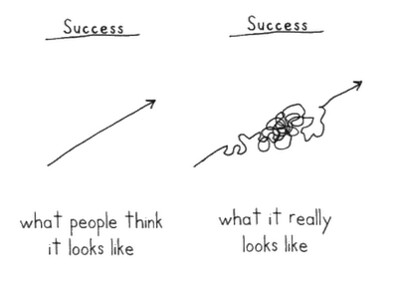
Positivity is great. You need to remain optimistic and upbeat to achieve your goals.
But, how far does this extend?
Are you supposed to ignore the fact your entrepreneurial, artistic or coaching journey can, sometimes, feel impossible and pretend everything is ok?
No.
It would be naive to think you’ll ride a wave of inspiration to the life of your dreams.
Instead, what awaits, are years (possibly even a decade), of hard work, failures, setbacks and lessons learned.
To say it can be a struggle is an understatement. Pursuing your entrepreneurial, artistic or coaching dream could be the hardest thing you ever do.
And yet, it will also be the most rewarding and inspiring thing you ever do.
So, you must continue. You must follow your bliss and see your vision through till the end. However, while doing so, you should understand some of the harsh truths awaiting you (see below) so you can plan for their impact, strengthen your character and increase the speed you, and your business, grow.
HARSH TRUTH NUMBER 1: Whatever you are planning to create, launch or achieve, will take longer than you think
I planned to release my latest book, The Personal Freedom Manifesto, in October of 2020. This was a postponed release date. Earlier in the year, I’d promised a summertime release.
Therefore, October was an immovable deadline. Nothing could delay this release.
So, what ended up happening?
The Personal Freedom Manifesto was released on the 1st March 2021!!!
How was this possible?
It’s easier if I show you.

My original concept for the book cover and title bombed. I went for attention grabbing but my audience didn’t ‘get’ what I was trying to achieve (Do you? Leave comment below). As a result, I had to do a rethink, and rebrand, in an attempt to discover something that would appeal.
Almost 6 months later, after countless revisions from the cover designers and a delay in the book formatting, The Genius of Joe Barnes became The Personal Freedom Manifesto, and got its release.

Major projects ALWAYS ALWAYS ALWAYS take you longer than you think.
That website you’re getting designed, which you imagine will take you 2 months, will take you 4. That new product you’re planning to create, which you imagine will be ready to launch in the new year, most likely won’t hit the market until the end of Summer. As Bill Gates once said,
“Most people overestimate what they can achieve in a year and underestimate what they can achieve in ten years.”
So, what can be done?
Solution: Whatever project you’re about to start, begin with this knowledge in mind. Add at least 50% to your proposed deadlines. So, if you think something will take you 6 months to complete, tell your clients and customers it will be 9 (and this really is a minimum). This should help manage their expectations and prevent you from getting down on yourself about your perceived lack of progress.
HARSH TRUTH NUMBER 2: YOU will have to be the driving force behind your work
Here’s the catch 22 situation you might be experiencing.
There’s a good chance you’re an introvert (or have introvert tendencies). After all, introverts are the ones more likely to think deeply, question the world around them and want to go in a different direction. However, to be successful in moving in this new direction, you’ll need to be the face of a new business or creative idea.
It’s very unlikely your work will get noticed by itself. On an almost daily basis, you’ll have to push yourself, or your work, out and into the public’s consciousness.
For a lot of people, this can be very uncomfortable. You’ll feel exposed, any criticism or trolling you receive will hurt and, at times, you’ll want to give up.
Solution: There is no real solution for this harsh truth. However, there is good news.
With time, being the driving force behind your work gets a lot easier. In fact, you may even start to enjoy it. After all, no one believes in your product, or project, as much as you, so who better to sell it? The more you push yourself out of your comfort zone, the more comfortable you’ll become.
HARSH TRUTH NUMBER 3: You’ll invest everything in a project, it will fail, and you’ll have to pick yourself up and start all over again
This is perhaps the harshest truth of all. The investment you make might be time, money or your heart and soul, but the outcome will be the same. Whatever you had your hopes and dreams set on, will NOT come to pass and you’ll be left picking up the pieces.
Rudyard Kipling writes about this in his classic poem, IF,
“If you can bear to hear the truth you’ve spoken,
Twisted by knaves to make a trap for fools,
And watch the things you gave your life to broken,
And stoop and build them up with worn out tools;”
Experiencing this kind of failure is heart-breaking. Back in 2012, I released my first book, Screw The System. I’d spent four and half years writing it (albeit part-time), put everything I had into its completion and expected it to do well.
My dream was that it would become a best seller and I’d be able to live off the royalties. The reality was that it took over a year to sell its first 100 copies. I was crushed.
Solution: Fortunately, since 2003, I’d been recording every significant positive result I’d experienced in a journal. Just because my book flopped, didn’t mean I stopped.
Ok, so I didn’t sell 100,000 copies, but I sold 100. That was something. I didn’t have 1000 five-star reviews but I had 10. Again, this was a positive.
By focusing on the positives in this way, rather than dwelling on the negatives, it lessened the impact of the failure and helped me learn the lessons needed to ensure my next book would be more successful.
HARSH TRUTH 4: Other people, possibly people you love, won’t ‘get’ what you’re trying to do
This one is sad. You’ll be excited about the new business you plan to launch, or the new book you want to write, and, in your enthusiasm, you’ll share your idea with your boyfriend or girlfriend, a parent or a close friend, and they’ll look at you as if you’re crazy.
Unfortunately, they can’t see what you see. Instead of excitement, a chance for success and doing something meaningful, all they see is risk and financial ruin.
Solution: Try not to take it personally. Over the years, I’ve learned that loved ones eventually come around and do support you (even if they never understand why you do what you do). Therefore, don’t waste time trying to convince them.
Instead, forge ahead. Go for what you want and you’ll be amazed at how your success can communicate in a way your words never could.
HARSH TRUTH NUMBER 5: At some point, you’ll question your sanity
In many ways, the path of an entrepreneur, coach or artist is harder than getting a regular job. The tendency to doubt yourself is greater because you haven’t got a crowd to support you.
Unfortunately, this can make you think society is right and you are wrong. As a result, when times get tough (and they will), you may start to think you’re crazy for ever attempting to follow your dreams.
Solution: Avoid thinking in terms of society being right and you being wrong (and vice versa). Instead, still your mind and listen to your heart. What’s it telling you? If love or inspiration is guiding what you’re doing then you must continue.
HARSH TRUTH NUMBER 6: You’ll make less money than you were (at least initially)
Begin your entrepreneurial, coaching or artistic journey and it’s likely you’re leaving behind a regular income. Of course, you can always work part-time or support yourself with a side hustle but, at least in the short-term, you may struggle to maintain the lifestyle you once had.
This causes a lot of people to panic. Next to our loved ones, we’ve been conditioned to value money above any other commodity. As a result, the temptation to give up on your dreams, or allow fear to cloud your decision making, is strong.
Solution: Understand that the ramifications of living on less, at least in the developed world, are mainly psychological. You are not going to lose your home and be unable to eat. Instead, you just won’t be able to afford some of the things you used to do and buy.
This isn’t so bad when you train your mind to focus on what you’ve gained. Remembering that you get to work on an inspiring project every day and create a future where you could, potentially, be financially free, should make up for any short-term sacrifices.
HARSH TRUTH NUMBER 7: Nobody is coming to save you
You’re on your own. That’s the way it is. You may hope that a marketing expert is going to come into your life and teach you how to promote your work, or that you can partner with someone to avoid giving presentations, but it’s probably not going to happen.
It’s more than likely you’ll have to rely on yourself for everything. This can be tough, time consuming (as you have to learn new skills), and lonely.
Solution: Commit to the process. Build resilience and embrace your challenges, believing you can overcome all of them.
If you do, an amazing thing happens. People do lend a hand.
Partnerships are, possibly, the most important factor to the success of your business or endeavour, but they only occur after you’ve demonstrated your value.
(image used courtesy of Bernard Goldbach flickr stream)
Call to Action
If you want to discover a passion you can make a living from and overcome the fears that are holding you back, check out my free course 30 Days to Escape The System. Click here to get the course right now! (You’ll find the tips on developing belief and self-confidence fascinating!)
Are you Crazy For Following Your Dreams? (from my diary)

I’ve been keeping a journal since September 2002. I don’t write in it every day and its pages lack the titillation and gossip associated with some diaries. However, over the years, it’s been a vital companion as I’ve transformed myself from lonely, directionless, psychosomatic illness suffering young man to confident, driven and dream achieving adult.
My journal is handwritten and spread across multiple notebooks. I’m not a huge fan of technology and, since I started in 2002, before the proliferation of laptops or terms like ‘digital nomad’ ever existed, it just seemed like the easiest thing to do.
As a result, a few years ago, I found myself with a mountain of notebooks – about 18 in total – and a slight concern about what would happen if they were damaged or lost. To pre-empt this problem, I decided to transcribe every one of them into Word.
Following My Dream
Recently, I reached Thursday 25th October 2007. Why is this date significant?
4 months prior, I’d started work on what would become my first book, Escape The System. One month prior, I’d met Tom Butler-Bowdon, a best-selling author, for his opinion on the manuscript.
Fortunately, he gave it his seal of approval and offered to mentor me through the writing process. However, it was still early days and I had many doubts about the validity of what I intended to do.
My main concern was my sanity. Was I crazy for pursuing a dream to become a best-selling author? Furthermore, what right did I have to think I could write something that good or become that influential?
After all, I was a nobody. I hadn’t been blessed with exceptional writing talent and I had no audience or following to speak of.
Instead, it wasn’t too much of a stretch to say I was delusional. With my degree in Politics, and having two parents who were lawyers, my focus should have been on forging a professional career. Instead, at the age of 27, I had the audacity to believe I could dispense life advice and write a self-help book.
At this point, it’s probably best I hand you over to my younger self. Read the following entry and I’ll then address some of the questions and fears that every dream chaser will face.
Thursday 25th October 2007
I’m feeling a little frustrated with my life at the moment. The inability to move my life forwards is raising some doubts in my mind. I’m starting to wonder if I’m on the right path or whether, in fact, I’m crazy.
Usually, I’d respond to these thoughts by thinking that I should ditch everything I’m doing – coaching, hypnotherapy, book – and live a conventional life. However, now, I can feel my attitude changing.
I realise that this is a battle within me and running away to a conventional life won’t change a thing. I’ve got to overcome these demons inside me and I’ll be faced with these wherever I go.
I’ve come a long way with my book but am I being unrealistic? My goal for the book is for it to become a bestseller and make me a millionaire. What are the chances of that happening?
My curse, or blessing, is that I have an overwhelming desire for something greater than the ordinary. I know I won’t be satisfied with anything less. However, greatness isn’t easy to achieve and I’m putting my whole life on the line in its pursuit. Relationships with women, and money, have been indirectly sacrificed as a result of what I’m doing and who I’ve become.
Are you Crazy?
What’s your dream? If it’s anything outside the remit of what society considers normal, or appropriate for someone of your background or education, then you’ll have, undoubtedly, experienced the same uncertainties that I went through. How will you handle them?
First, you must understand that it’s perfectly normal to feel this way. The way you choose to live your life, and the goals you’re chasing, are different to over 95% of the people around you.
It’s hard being on the wrong side of this statistic. You may feel arrogant for assuming you are right and the majority are wrong. Furthermore, you may question your judgement. Despite your instincts telling you one thing, it can be hard to stay true your dreams when the people around you are telling you another.
This dichotomy can create doubt about the validity of your dream. You might think nobody will accept what you’ve created or have to say. If this doubt intensifies, you might catch yourself echoing society’s thinking as you challenge yourself with recriminations like, “Who am I to think I know better than others? There’s nothing special about me.”
Thinking this way can be a death sentence to your dream. I’ve already mentioned that I began writing my book in 2007.
When do you think it was published?
5 years later!
When did I first have the idea of writing it?
5 years earlier!
Do you get the point?
Self-doubt is a bitch and will destroy your dream. Or, if it doesn’t destroy it, it will cause such a delay that you miss out on many years of living it.
For these reasons, the first thing you must do if you ever question your sanity is to give yourself some breathing space. Remember, it’s understandable to feel a little daunted by having a dream that, in its infancy, other people may not believe in or understand. However, you must never allow this uncertainty to turn into doubt.
Know that you are right for wanting to pursue a path that brings inspiration and love into your life and has the potential to do the same for others. This is how humanity, the planet, and perhaps even, the universe, moves forwards. Inspired individuals, and groups, bring light into the world and, by doing so, cast out the shadows of fear, hatred and confusion.
Martin Luther King immediately springs to mind as an example of a man who went through this process. At first, he must have thought his dream for racial harmony in 1950s and 1960s America was crazy. However, by staying true to his path, he illuminated the minds of millions and helped foster love and understanding throughout an entire nation.
Final Thought
Following your dreams is, perhaps, the hardest thing you’ll ever do. Undoubtedly, you’ll face many moments like the one recorded in my diary above (I still do).
When experiencing them, there’ll be a strong temptation to think about returning to the world you used to know. My knee jerk reaction to facing seemingly insurmountable challenges, or failing to advance, used to be thinking about quitting tennis coaching, hypnotherapy and writing, and retraining to be a lawyer or a teacher.
At the time, it seemed like the easy way out. However, who’s to say turning your back on your dream and following society’s path will actually be easier or provide the reprieve you’re seeking?
Actor and comedian Jim Carrey makes this very point when giving a speech to the graduates at the University of Mumbai at their commencement address in 2014. When mentioning his father, who also had dreams of becoming a comedian yet chose to work as an accountant, he had this to say (click on video below).
Are you ready to take that chance?
If you do, just remember that the battle you must fight, and the journey you must travel, are within. To a degree, the external world doesn’t matter and neither do your dreams (after all, they can sometimes change and be refined).
What does, though, is that voice within you that wants to experience, and express, all forms of love. This must be heeded and, if it’s telling you to take a course of action, even if it’s one society deems crazy, then you must follow. It’s the only path to inner peace I know.
(image taken from Anthony Starks’s photostream on Flickr)
Call to Action
If you want to discover a passion you can make a living from and overcome the fears that are holding you back, check out my free course 30 Days to Escape The System. Click here to get the course right now! (You’ll find the tips on developing belief and self-confidence fascinating!)
How to Cope with Loneliness and Isolation

Let me take you back to 1999. I’m in my first year at University, many miles from home and I don’t know a soul.
I want to make friends. Furthermore, I’m hopeful I might meet my first serious girlfriend. However, something inside me is changing.
I’m starting to grow resentful of my peer group and questioning the university experience.
- Why is it we can only socialise and be open when alcohol is involved?
- Why are so many people reluctant, or scared, to say hello or strike up a conversation at lectures or tutorials?
- Why does no one make an effort to be friendly with me?
The last question sticks in my mind. It bothers me and, as a result, I make a terrible decision.
Fuck’em, I thought to myself. If you’re not going to make an effort with me then I won’t make an effort with you.
As I said, bad move. Soon, I was spending more and more time by myself. Conversations were limited to a “hi,” nod or grunt. I’d attend my lectures, go to the gym, watch tv in the common room, occasionally go the cinema (by myself) and that was how I spent my time at University. It wasn’t that I never spoke to anyone. However, in the entire 3 years I was at university, I could count on two hands the number of meaningful conversations I had with other people, much less a laugh or a good time.
Looking back, I can see the extremely negative impact this had on my state of mind. However, later in life, I also discovered a hidden blessing in my isolation.
This experience, and many more after I’d left university, gave me an insight into loneliness. I know how negatively it can affect your mind. However, I also know there is both a way out, and a way to reduce the sadness of being alone.
It’s this knowledge that I now want to share with you. I want you to know there’s hope and, even if it feels like not a single soul cares, happiness is possible.
The Dangers
Before we explore the potential for change, I must issue a warning. Spending too much time alone, no matter how much you enjoy your own company, is not healthy.
Sure, everybody needs time in solitude and moments of reflection. However, when they start to become your life, rather than a respite, you could be heading for danger.
The damage loneliness causes will catch you unawares. My own experience caused me to retreat deeper into my own world.
Without realising it, I became a prisoner to my thoughts. All I could focus on was a series of psychosomatic ailments that I believed were real. I couldn’t sleep, regularly experienced IBS, chronic shoulder pain and had a bloodshot left eye. Thoughts about not getting enough sleep, how bloated I felt, acute awareness of any twinges in my shoulder and phantom sensations in my eye, dominated my consciousness.
As a result, I wasn’t living. Instead, I existed in my head. I may have walked around and attended lectures but my mind was detached from the reality around me.
How did I get myself in this state?
Essentially, I had nobody to calibrate my thoughts and experiences. Nobody was there to say, “Snap out of it, Joe. You’re young, healthy and there are so many ways you could be enjoying your life.” Instead, because I spent so much time on my own, the focus on my ‘problems’ intensified and, as a result, they became more real.
This is the problem with extended periods of isolation. Without realising it, your focus becomes too heavily directed towards yourself. As a result, it becomes easy to overthink, doubt and allow yourself to get bothered by the trivial.
As harmful as these consequences can be, they say nothing of the negative impact loneliness can have on your attempts to socialise. Social skills are real. Spend a lot of time around other people and you know what to say, can avoid awkward moments and feel connected. Spend a lot of time on your own, and social interactions can be punctuated with awkward silences, miscommunication and an inability to relax when in the company of others.
Just what you don’t want!
You need to meet new people to break free from your loneliness. However, you feel totally unprepared when the opportunity to make new friends occurs.
It’s a catch 22 situation. Fortunately, there is hope.
The Upside
Spending a lot of time on your own isn’t all bad. There are benefits to your isolation.
First, you can focus your mind in a way that just isn’t possible when surrounded with too many distractions.
If there’s something you want to achieve, or a goal you’re working towards, continued and intense focus upon this objective is required. I’ve lost count of the number of times I’ve achieved a mini breakthrough in my life after periods of clear focus. These almost always occurred after either feeling low due to spending too much time on my own, or failing at something that was important to me.
Somehow the low mood cleared my mind and prevented racing thoughts. As a result, I was able to focus intensely on what I wanted to achieve (because of the seriousness of my situation, I didn’t want to listen to podcasts, music or be distracted by ongoing debates in my mind). It was as if I’d lost all appetite for mental ‘junk’, and was so keen to improve my situation that disciplining my thoughts was no longer a hassle.
The renowned 19th century inventor Nikola Tesla seemed to agree. He clearly valued time alone, and the opportunity to focus his thoughts, when his said, “Be alone, that is the secret of invention; be alone, that is when ideas are born.”
The second upside to loneliness is that enables you to focus on what matters.
As much as you may want to feel integrated with a group, or experience loving relationships with other people, there is a downside to too much human contact. Not only does it impact the ability to focus your mind, you could find yourself living a life which isn’t your own.
You get swayed by current fashions and trends, you stop listening to your inner voice and, as a result, can end up directionless.
This won’t happen when you experience prolonged periods of loneliness and isolation. You’ve got time to focus on what matters to you. There are no pointless social obligations, friendships of convenience and other people’s expectations, competing for your time. Instead, you can plan your schedule around what you want to do.
Of course, you don’t want to spend your entire life in isolation. However, if, for whatever reason, you find yourself spending a lot of time on your own, you can use it to improve your financial situation, knowledge and physical health to such a degree that, when you do emerge from your social hibernation, you are a far stronger person.
Ironically, this kind of self-reliance makes you more attractive to other people. Suddenly, you’re mysterious and interesting rather than simply being a loner. Your experiences and knowledge mean you have something to offer in one to one and group conversations.
The Way Out
Despite the benefits of being alone, you are probably, still, looking for a way out. This is understandable. Life is so much richer in the company of people you love and find interesting. Therefore, you want to know how to raise your energy so that when you meet people, you’re able to be positive and engaging. Here’s the method I used (and still do).
Whenever I feel lonely, I remember the words of Yoda. In the second Star Wars film, Episode Five: The Empire Strikes Back, he tells Luke Skywalker,
“For my ally is The Force, and a powerful ally it is. Life creates it, makes it grow. Its energy surrounds us and binds us. Luminous beings are we, not this crude matter. You must feel the force around you. Here, between you, me. The tree. The rock. Everywhere.”
You feel lonely because you feel trapped; imprisoned by four walls or a society that doesn’t care or that you don’t understand. However, you are not trapped.
As Yoda says, you are a ‘luminous being.’ It isn’t reality (the material) that’s trapping you, it’s your energy. Therefore, every time you feel alone or isolated, focus on feeling good.
Amazing changes will happen when you do this with consistency. You’ll be surprised at how you can transform from lonely, to inspired, in little more than 30 minutes. A situation that once seemed inescapable and never ending, now becomes an opportunity. Nothing can stop you.
Conclusion
I hope this blog post has given you something to think about. No matter how lonely and isolated you feel, and no matter how many years you’ve felt this way, you are presented with a very simple and clear choice.
Either succumb to your situation and allow it to overwhelm you or, master the art of raising your energy and watch your life change. In the words of Andy Dufresne, in Shawshank Redemption, “Get busy living or get busy dying.”
Call to Action
If you want to discover a passion you can make a living from and overcome the fears that are holding you back, check out my free course 30 Days to Escape The System. Click here to get the course right now! (You’ll find the tips on developing belief and self-confidence fascinating!)
Excerpt from my New Unreleased Book: The Personal Freedom Manifesto

CHAPTER 5: CHANGE YOUR THOUGHTS TO CHANGE YOUR LIFE
Back in 1903, James Allen’s book As A Man Thinketh was released. The title is an abbreviation of a bible verse from the book of proverbs. In its entirety, it reads, “as a man thinketh in his heart, so he is.”
To our modern world, this is a curious promise. 21st century life is about the material. We value what we can see, touch and, most of all, possess. This is real. The laws of nature, which we believe we’ve discovered, govern how our universe works. As a result, we live with the belief we have almost everything figured out.
Compared to these discoveries, what is a thought? The materialist would probably dismiss it as irrelevant mental chatter or understand it as a reaction to the events of the day. However, what if the relationship was reversed? Is it possible that the thoughts in your mind determine the circumstances and events of your life?
It’s a dangerous idea. After all, if you follow this line of thinking then you become responsible for everything that occurs. If you spend too much money and slip into debt then you only have yourself to blame. Likewise, if, after years of stress, poor diet and lack of exercise, you experience a heart attack or develop a terminal disease, then you must accept responsibility.
Although both of these examples appear to have a physical cause – too much spending and poor lifestyle choices – there is a deeper trigger point. The debt might occur after persistent thoughts of impressing people with your gadgets, cars or clothes. Likewise, the illness might occur as a result of focusing on money to the exclusion of your health.
How do you feel about this diagnosis? Are you angry or upset? Do you dislike the idea of being responsible for your misfortunes?
While total responsibility can be a bitter pill to swallow, there is a silver lining to this way of thinking. Surely, if you create your reality through thought then, within your ability, is not just the potential to harm your life, but the possibility of setting yourself free. Persistent thoughts of success will lead to their material and spiritual realisation. Likewise, persistent thoughts of health and harmony will lead to an optimally functioning body.
Society never promotes this idea. We’re taught that the individual is powerless. Not only are we subject to the laws of nature, but we are also governed by the rules of society. As a result, life is very much out of our control. Illness, breakdown of relationships, accidents and our successes and failures have little to do with what we did. Instead, we are granted the comfort of excuses. It was our genes, our personality, our mental disorder or bad luck.
Which option do you prefer? Are you willing to shoulder responsibility in return for the opportunity to create the life you want? Or, would you rather allow external factors to govern the direction of your life while you remain blameless?
After reading this chapter, my hope is that you will choose the former. In doing so, there is an important point to remember.
The Bible states that, “as a man thinketh in his heart, so he is.” On first reading, this may appear to be an oxymoron. After all, we don’t think with our hearts. However, on deeper inspection, the Bible hasn’t made a mistake.
Thinking with your head is something that, according to a 2005 National Science Foundation study, occurs 12,000 to 60,000 times a day. Most of these thoughts are repetitive (95%) and have little to no (direct) impact on your life. We can all attest to the fact that merely thinking once about a million dollars or a brand-new Ferrari doesn’t result in their manifestation. However, thinking with your heart is something entirely different and is far rarer.
Thinking with your heart occurs when your thought generates an emotional reaction. This might happen when you’re thinking about an upcoming presentation and a wave of anxiety hits you. Alternatively, you might be thinking about achieving your goal and it generates a feeling of joy. This is thinking with your heart and it shapes your reality.
Understanding the distinction between these two types of thinking reveals what it means to be a positive thinker. The common misconception is that positive thinking involves imagining yourself doing well. For example, throughout your day, you might deliberately visualise yourself meeting your future husband or wife or reaching your sales target.
The reverse applies with negative thinking. Throughout your day, you might repeatedly, although this time unintentionally, see yourself failing. However, what happens if these thoughts, whether positive or negative, fail to trigger an emotional response?
Not a lot. The thought, lacking emotion, won’t penetrate your subconscious and form a belief. Instead, it will be dismissed.
Therefore, to be a true positive thinker, you must be a positive feeler. You must be skilled with your thoughts and aware of your emotions. Don’t get frustrated running hundreds of so-called positive thoughts through your mind wondering why nothing is changing. You’d do far better to relax, choose one specific goal, or outcome that you know would make you happy, and, from time to time, focus on this.
After a while, you’ll build up a connection with this goal or outcome and will train your subconscious to respond with a positive feeling. (In NLP this technique is called anchoring, although is typically performed by touching some part of your body or through a routine). When this occurs, changes happen. You’re able to raise your energy and this will have a dramatic impact on your work, creativity, relationships, sports and anything else that is important to you.
Remember, though, this discipline takes time. Your first step is to adopt traditional positive thinking. Imagine yourself doing well even if, at first, you feel no emotional reaction. Work on releasing the negatives as well. If you catch yourself dwelling on an unpleasant memory, or fear of an event in the future, remind yourself to let go.
With time, you’ll figure out your triggers and be able to generate a positive emotional response. When this happens, you’ll discover that your mind operates in a similar manner to a computer. It has to obey your instructions. Positive thoughts, backed by emotions, will bring you answers and encounters that will advance you in the direction of your dreams.
Why you shouldn’t place limits on your thinking
Perhaps your dreams are on an epic scale. Like Elon Musk, you have visions so great you imagine colonising Mars. Or, like Michael Jackson, you believe you can fly (He was once quoted saying, “We can fly, you know. We just don’t know how to think the right thoughts and levitate ourselves off the ground.”)
Crazy, right? These kinds of people are unhinged and don’t live in ‘the real world.’ However, look at what they accomplish.
Elon Musk’s SpaceX created the first privately developed rocket to carry a commercial satellite into orbit. Michael Jackson, despite being told by everyone around him that it was impossible, created the greatest selling album of all time. So, are they crazy for having outrageous dreams or is this kind of thinking a prerequisite for achieving goals that seem out of the ordinary?
We’re always being told about our limits. According to society, so much is impossible. For example, for a long time, it was deemed physically impossible for a human to run a mile in under 4 minutes. However, since Roger Bannister broke that limit in 1955, over 500 people, in America alone, have matched this feat.
In Arnold’s Schwarzenegger’s autobiography, Total Recall, he mentions that,
In weight lifting, for many years there was a 500-pound barrier in the clean and jerk . . .But as soon as the great Russian weightlifter Vasily Alekseyev set a new world record of 501 in 1970, three other guys lifted more than 500 pounds within a year.
Another limit gets broken. How much proof does humanity need before it opens its collective mind to the idea that there are no limits (or, that’s it’s not useful to think of them)?
Perhaps you are apprehensive of removing the limits on your thinking for fear of what other people might say. To prevent this shutdown, we’re going to make a deeper analysis of Michael Jackson’s comment about people flying.
Of course, to date, no one has been recorded achieving this feat. And, perhaps, no one ever will. However, cast your thoughts back to the mind-set of a human living 600 years ago, ponder the possibility of machine powered flight from this perspective, and you’ll see that you’re presented with a similar situation.
Back then, if someone had said that humanity will crisscross the skies in giant flying machines within 600 years, it would have been considered utterly impossible. However, fast forward to today, and this is our reality.
Do you get the point? For the so-called impossible to occur, it takes people with a mind-set like Michael Jackson and Elon Musk. Such a person, living 600 years ago, would have been interested, rather than dismissive, about the possibility of machine powered flight. As a result of this curiosity, research would have been undertaken, prototypes built and, as the centuries passed, and other illuminated minds continued their work, actual flight would finally occur.
A similar situation might occur with thought-powered flight. Or, it might not. Whatever the case, it serves no purpose to dismiss ideas on the grounds that they challenge the paradigms of our day. For, as we have seen with the examples of Jackson and Musk, thinking outside society’s limitations is beneficial for both the individual and for humanity.
To achieve your dream, you will also have to let your imagination soar. Allow yourself to contemplate the so called impossible, go to possibilities in your mind that have never been conceived before and, by doing so, unlock your full potential.
Never say that it can’t be done. What’s the point? If it can’t, then you’re no worse off than before and, if it can, you could be the one breaking new ground while everyone stares in amazement.
LIKE WHAT YOU’VE READ? TO BUY MY NEW BOOK ‘THE PERSONAL FREEDOM MENIFESTO’ ENTER YOUR EMAIL ADDRESS IN THE BOX BELOW AND YOU’LL RECEIVE AN EMAIL UPON RELEASE – LIKELY EARLY JANUARY 2021
Guest Post: You Only Live Once

(by Andy Beck)
How many times have you heard that saying? And how strongly do you resonate with it? Not everyone does. And nor did I, for a long time.
30 Years of Normal
Until a few years ago, I knew intellectually what “you only live once” meant. But I didn’t feel it. This was probably due to my very “normal” upbringing and early adulthood. Preschool, primary school, grammar school, university (where I studied languages), and then a series of 40-hour office jobs that took me through the rest of my 20s.
Sounds familiar, right? Yeah, keep reading.
Around the time I hit 30, I started to question where the hell my life was going. As competent as I’d always been in the office, I didn’t wholeheartedly care about the work I was doing. Friday afternoons were always welcome, and Monday mornings were a bitch. In my teens, I’d always dreamt of being a musician, and I’d dabbled in creative writing. Now, although I was nearing 30, those dreams were still there.
3 years of not normal
A few months later, back in late 2016, I went into work one morning and learned that my then-employer wanted to put me back into my old department. I appreciated their trust in me, but I really didn’t want to do that. It involved doing work (and talking to clients) that didn’t sit so well with me, and had—in the past—even kept me awake at night.
Worried, I considered my options. I couldn’t stay in my then-department, as my transition there had only been temporary. I didn’t want to return to my old role, of course. But I couldn’t really quit altogether either, not without some kind of plan. I had rent to pay, groceries to buy, utilities to afford, blah blah blah. I tried asking my employer for a 30-hour contract (instead of 40), but was told quite flatly that I didn’t stand a chance.
The days that followed involved some soul-searching, but I decided—finally—that I was done with the 40-hour corporate work week. For the first time in my life, I knew what I wanted. What I wanted, for now at least, was a job with reduced hours that would cover my bills, but give me the time I wanted to build up a side career in music and writing – kind of like strategy B, “The Strategist’s Path”, from Joe’s book Do The Work You Love. What I certainly didn’t want was to retire in my 60s and regret not having lived the life I could have.
And so, in December 2016, I took the leap and quit my job.
Now let me ask you something—has life ever struck you as humdrum? Emotionless? Devoid of meaning? Well try quitting your job. That’s not humdrum. That’s real, baby. 100% real.
Of course, not everyone liked my decision. When I told my parents and close family what I’d done, they were horrified. One of them told me I was “making the biggest mistake of my life”. That’s not an easy situation to be in, when those who you love criticise you harshly.
It took me two months to find a new, 30-hour job. But I got it. And I began to use my new-found free time to craft the life I wanted. A life of Irish/Scottish folk music, and later, of writing a novel on the subject.
Some three years on, I’ve put a CD out, made some money from guitar tuition and gigging, and released my debut novel Folk Springs Eternal, which is gradually selling copies and garnering reviews on Amazon and Goodreads.
So what have you learned, Andy?
Fair question. What have I learned from abandoning the beaten path and taking the road less travelled? Well, I won’t lie to you, dear reader—I’m still in the 30-hour job I mentioned above, because I’m not earning enough money yet (underline the word “yet”) to do music and writing 100% of the time. Nevertheless, I’ve grown so much over the past four years. Here are the most key things I’ve learned.
1. Self-confidence.
That little voice in my head that used to nag, saying things like “this is a pipe dream, Andy” or “stop lying to yourself”, is a damn sight quieter these days. Three-and-a-half years of finding myself, getting to know my weaknesses, and getting better at eliminating them, has helped with that. It’s true that developing mental fortitude is not a five-minute job. But don’t fret; it’s all part of the journey along the rocky road to success.
2. Asking for help.
Never, and I mean NEVER, be afraid to ask people for assistance. I was afraid to do so, for several years, and it held me back. Don’t make the same mistake I did; the worst that people can do is say no (or ask for too much money). Other than that, start getting people on your side who don’t laugh at your ideas, but believe in you and see the value in what you do. Think of ways that these people might help you with your own ventures. You will benefit from their skills, and learn from their feedback.
3. Accountability.
This is a big one. Hang out with people who believe in you, not with people who don’t. There are some inspiring and enthusiastic individuals out there; if you’re a bit clueless as to where to find them, Joe’s Success Club (of which I am also a member) is a decent place to start. Once you find some people who resonate with you, ask them to be your accountability partner. This is basically where you each set goals, and check in with each other once a week to see how you’re progressing. In other words, you hold them accountable to their goals, and they you. The likelihood of you achieving a goal is 65% higher if you’ve promised it to someone, because you won’t want to let them down. Book an appointment to check in with that person, and the statistic goes up to a staggering 95% .
4. Results.
My own journey towards Doing The Work I Love might not have been smooth so far, but it’s been truly exciting. It feels good when a contact calls you out of the blue, wants some music written, and pays you for it. It feels good to get emails here and there asking for paid translations (another little side venture of mine). And selling 50 copies of my first novel since it came out in September? That feels particularly nice. The results and the social proof will start to come for you, as well.
So, why should I care?
My story is relatable for anyone who’s just getting started, because like you, I’m not all the way there yet. On the figurative expedition to conquer the figurative Everest, I’m still climbing at around 2,000m (it’s 8,848m to the top). But as Red Hot Chili Peppers guitarist John Frusciante once said, “you don’t lose anything for any other reason than if you just give up on yourself.” And giving up is not what I intend to do. Come Hell or high water, I am going to get to the top, motherfucker.
So now…what about you? What step will you take next en route to your own peak? I want you to tell us in the comments. When I die, at least I can say I’ve done something that truly matters to me. If you want to be able to say that about yourself, then remember this: no-one knows what happens next.
In that sense, you really do only live once.
Andy Beck is a devoted husband, musician, multilinguist, and author of Folk Springs Eternal. More information on Andy, and his book, can be found at his website here
Book Insight: There is No Planet B

Although the Coronavirus outbreak and, to a lesser degree, The Black Lives Matter protests, have dominated the news this year, the main story has gone ignored. The health of our planet is spiralling out of control. Temperatures are rising, ice caps are melting, methane stores are starting to be released, oceans are becoming acidified and forests are being chopped down at an alarming rate. If these actions continue unchecked, the consequences could be catastrophic for both our, and future, generations.
Since I was a young boy, I’ve always had a horrified fascination with man’s impact on the planet. I remember being deeply concerned as a 9-year-old, watching Newsround, and learning about the deforestation of the Amazon rainforest. Therefore, it should come as no surprise that I’d feel drawn to a book like Mike Berners Lee’s There is No Planet B.
Having recently finished it, I now want to draw out some of the main themes and statistics. Hopefully these will inform you of the major issues facing the planet and encourage you to read the book in its entirety.
- We are living in the Anthropocene. Humans are no longer subject to the whims of their environment. Instead, they are the creators. The planet now bends to our wishes. While on the surface, this may appear to have its advantages (longer life expectancy, less starvation etc), there are consequences to this dominance.
- Since the Industrial Revolution, the average planetary temperature has risen by just over 1C. This may seem insignificant but we are already starting to experience the detrimental impact of this rise. At the 2015 Paris Climate Conference, the world’s leaders agreed to limit man made climate change to no more than a 1.5C increase. Hitting 2C could, potentially, trigger a worldwide catastrophe.
- To stay in line with the Paris Agreement, the world’s remaining fossil fuels must stay in the ground. Coal generates the greatest CO2 emissions, but we must also find alternative energy sources to oil and gas.
- Our best bet is to harness the power of the sun. If we covered 0.1% of the earth’s surface with solar panels, they would meet all of our current energy needs. Wind and hydro energy are a useful supplement. However, there should be no mistaking that solar is, by far, the most efficient and practical renewable energy source.
- Added to this, we must capture some of the existing carbon in the atmosphere (at present, we emit 35 billion tonnes a year). There are two methods to achieving this aim. First, is carbon capture at the point of extraction. Present technology enables us to do this but it’s not an efficient process.
- Therefore, we must figure out how to capture carbon from the ambient air. Sadly, our technology is no way near being able to accomplish this complex feat. We need greater investment in research and development.
- A potential source for these funds could be a worldwide carbon tax. To be meaningful, it would have to be both prohibitively high and enforceable. A figure of $300 per tonne is suggested, which would raise a much needed $10 Trillion per year.
- None of these solutions can work, though, without some form of global governance. This is not suggested as a replacement to national or local government, merely an addition. Nations across the world must act for the greater good of humanity, and the planet, even when climate change appears to be of benefit (e.g. Russia’s northern ports being accessible for many more months of the year due to melting ice).
- The free market is not equipped to deal with this challenge. Regulation is needed and system’s must be put in place to enforce any global deal. The profit motive, as a driving force for business, must be re-evaluated and the idea that GDP reflects a nations success, rejected.
- If you’re looking to make changes on a personal level, reduce your beef and dairy consumption. Food and land related emissions account for 23% of the worldwide total. Much of these are caused by the growing of crops, and removal of forests, to feed cattle. A small dietary chance can have a positive impact.
Call to Action
If you want to discover a passion you can make a living from and overcome the fears that are holding you back, check out my free course 30 Days to Escape The System. Click here to get the course right now! (You’ll find the tips on developing belief and self-confidence fascinating!)